How to Become a Real Estate Agent: A Step-by-Step Guide
Licensing rules, prelicensing hours, exam odds and the sponsoring-broker step, laid out in the order you would actually tackle them from zero experience.
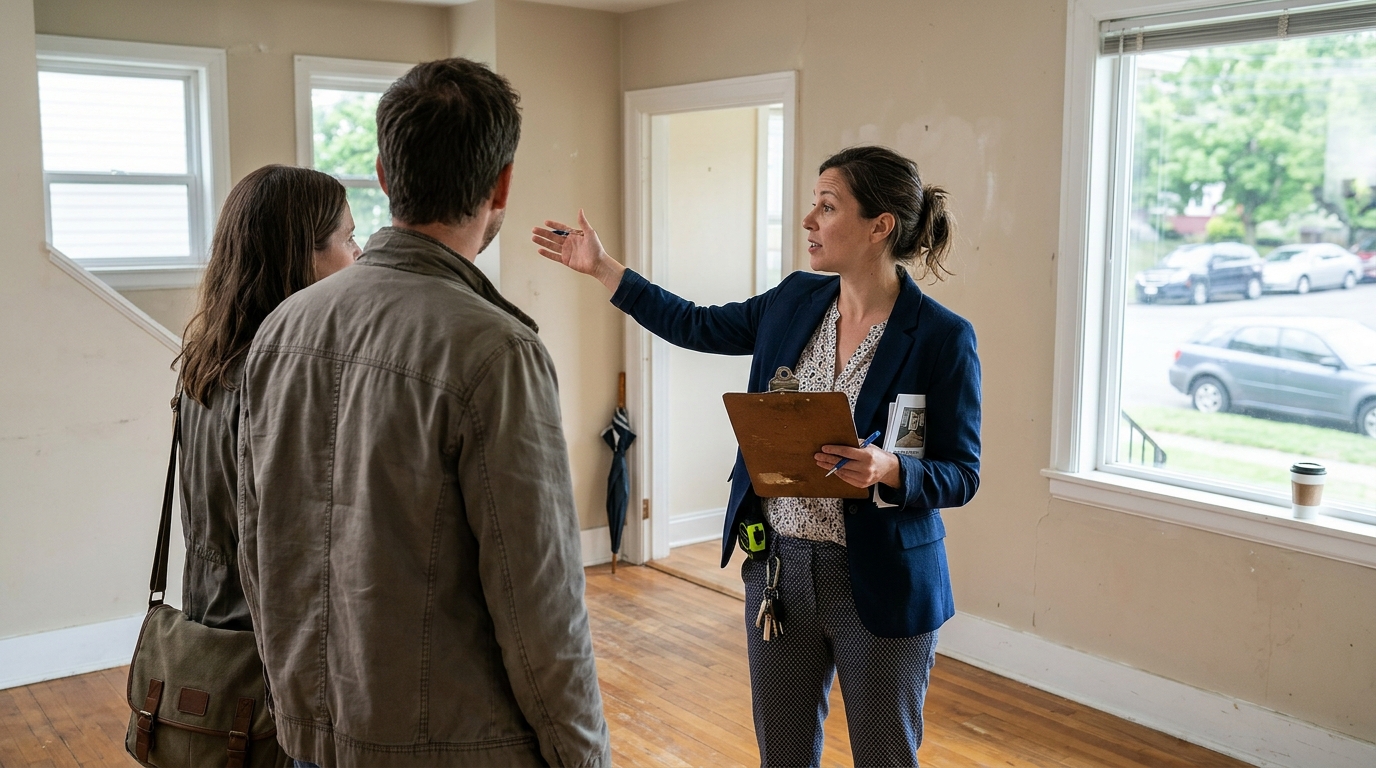
Becoming a real estate agent means meeting your state's licence requirements, passing a state exam, and signing on with a sponsoring broker before you can take a single client. Every state requires a licence, and the usual minimums are being at least 18, holding a high school diploma or equivalent, completing prelicensing courses and passing an exam, with a background check in some states (U.S. Bureau of Labor Statistics, 2025).
Most people earn a licence in about four to six months, though a focused candidate studying online in a low-hour state can finish in eight to ten weeks (RealEstateU, 2026). Getting licensed is the quick part; building a client pipeline that pays commissions takes longer.
What the Job Involves Day to Day
A typical week starts with lead work: soliciting clients, returning calls from enquiries, and interviewing buyers and sellers about what they need and can spend (U.S. Bureau of Labor Statistics, 2025; ONET OnLine, U.S. Department of Labor). From there you generate lists of properties compatible with a buyer's budget and requirements, and for sellers you compare the property with recently sold comparables to arrive at a competitive asking price (ONET OnLine).
Midweek is usually logistics and marketing. You coordinate appointments to show homes, drive clients between properties, and promote listings through advertisements, open houses and the multiple listing service (O*NET OnLine). Showings and open houses push a lot of this work into evenings and weekends, which is why most agents work irregular hours even though many set their own schedules (U.S. Bureau of Labor Statistics, 2025).
When an offer lands, the job shifts to negotiation and coordination. You present offers, mediate between the two sides, then confer with escrow companies, lenders, home inspectors and pest control operators to make sure every term of the purchase agreement is met before closing (U.S. Bureau of Labor Statistics, 2025; O*NET OnLine).
Running alongside all of it is the business side. Most agents are self-employed, so prospecting, record-keeping and marketing spend are yours to manage, and income arrives as commission split among the buying agent, selling agent, brokers and firms (U.S. Bureau of Labor Statistics, 2025).
Skills and Traits That Help You Succeed
- Comparative market analysis (a learnable hard skill). Pricing a listing means pulling recently sold comparables and adjusting for size, condition and location until you can defend a number to a seller who thinks their house is worth more (O*NET OnLine, U.S. Department of Labor).
- Multiple listing service and listing software fluency (a learnable hard skill). You enter listings, set search filters for buyers, and promote properties through the MLS; errors in a listing's data show up fast in missed showings (O*NET OnLine).
- Business skills. Most agents are self-employed, so you track your own marketing spend, commission splits with your broker, and tax set-asides between closings (U.S. Bureau of Labor Statistics, 2025).
- Interpersonal skills. Interviewing a client about budget, schools and commute, then telling them their offer is unlikely to win, both require you to stay credible without overpromising (U.S. Bureau of Labor Statistics, 2025; O*NET OnLine).
- Organisational skills. A single week can involve showings for four buyers, two open houses and three contracts in escrow, each with inspection and financing deadlines (U.S. Bureau of Labor Statistics, 2025).
- Problem-solving skills. When an inspector flags a roof issue or a pest control report stalls a sale, you negotiate repairs or credits so the purchase agreement terms are met before closing (U.S. Bureau of Labor Statistics, 2025; O*NET OnLine).
- Self-motivation. Nobody assigns you clients; early earnings are irregular, so prospecting has to happen on weeks when no deal is closing (U.S. Bureau of Labor Statistics, 2025).
How to Break Into This Career
- Check your state's eligibility rules (about one week). Minimum requirements typically include being at least 18 and holding a high school diploma or equivalent, and some states require a background check (U.S. Bureau of Labor Statistics, 2025). Your state real estate commission publishes the exact list.
- Complete state-approved prelicensing education (roughly 3 weeks to 4 months). Hour requirements are set by each state and range from about 40 hours in states such as Massachusetts and Michigan to 180 hours in Texas (PrepPass, 2026). In Texas that means 180 hours of Texas Real Estate Commission (TREC) approved qualifying education delivered as six 30-hour courses before you may sit the exam (Texas Approved Courses, citing Tex. Occ. Code and 22 TAC).
- Study for and pass your state's real estate salesperson licensing exam (2 to 6 weeks of focused prep). National first-time pass rates commonly fall in the 50 to 60 percent range, varying by state and exam provider (Volt Exam Prep, 2026), so plan for timed practice tests on both the national and state-law portions.
- Submit your licence application, fingerprints and any background check (2 to 6 weeks of processing). Every state requires a licence to practise (U.S. Bureau of Labor Statistics, 2025); processing times depend on your state commission's queue.
- Affiliate with a sponsoring broker and start as a real estate sales agent (2 to 4 weeks of interviews). Reported job titles for this occupation include Real Estate Agent, Real Estate Salesperson, Realtor and Realtor Associate (O*NET OnLine, U.S. Department of Labor). Ask each brokerage about commission splits, desk fees, lead sources and training before you sign.
- Work your first transactions to a commission cheque (commonly 1 to 4 months after licensing). Income comes from commissions divided among the buying agent, selling agent, brokers and firms, and earnings are especially irregular for beginners, so budget for a gap before your first closing (U.S. Bureau of Labor Statistics, 2025). After roughly two years as a licensed sales agent plus additional formal training, most states allow you to pursue a broker's licence (U.S. Bureau of Labor Statistics, 2025).
Typical Timeline From Start to First Job
These milestones follow the six steps above. Most people earn a licence in about four to six months, while a focused candidate studying online in a low-hour state can finish in eight to ten weeks (RealEstateU, 2026).
- Week 1: Confirm your state's age, education and background check requirements with the state real estate commission (U.S. Bureau of Labor Statistics, 2025).
- Weeks 2 to 12: Complete prelicensing coursework. Allow the short end in a roughly 40-hour state such as Massachusetts or Michigan and the long end for 180 hours of TREC-approved qualifying education in Texas (PrepPass, 2026; Texas Approved Courses).
- Weeks 10 to 16: Sit the state licensing exam after timed practice; build in the possibility of a retake, since first-time pass rates commonly run 50 to 60 percent (Volt Exam Prep, 2026).
- Weeks 14 to 22: Licence application, fingerprinting and background check clear.
- Months 4 to 6: Interview brokerages and sign with a sponsoring broker as a real estate sales agent (O*NET OnLine, U.S. Department of Labor).
- Months 5 to 10: First listings and showings lead to a first closing and commission cheque; expect irregular earnings at this stage (U.S. Bureau of Labor Statistics, 2025). Plan ahead for renewal, as state licences typically must be renewed every 2 to 4 years with continuing education (U.S. Bureau of Labor Statistics, 2025).
Salary and Outlook Snapshot
Pay is almost entirely commission-based, so published wage figures describe what agents actually netted, not a salary an employer offers you. Check the current numbers yourself before you commit: the rows below name the exact series to look up.
| Measure | Source and year to look up | Where to find it |
|---|---|---|
| Entry-level pay (lowest 10 percent, real estate sales agents) | U.S. Bureau of Labor Statistics, May 2025 wage data | BLS Occupational Outlook Handbook, Real Estate Brokers and Sales Agents |
| Median annual wage, real estate sales agents | U.S. Bureau of Labor Statistics, May 2025 | BLS Occupational Outlook Handbook, pay tab |
| Median pay, brokers and sales agents combined | U.S. Bureau of Labor Statistics, 2025 | BLS Occupational Outlook Handbook, quick facts |
| Experienced pay (highest 10 percent, real estate sales agents) | U.S. Bureau of Labor Statistics, May 2025 | BLS Occupational Outlook Handbook, pay tab |
| Experienced track: median annual wage, real estate brokers | U.S. Bureau of Labor Statistics, May 2025 | BLS Occupational Outlook Handbook, pay tab |
| Job growth, 2025 to 2035 | U.S. Bureau of Labor Statistics, 2025 projections | BLS Occupational Outlook Handbook, job outlook tab |
Two things shape where you land in that range. First, commissions are divided among the buying agent, selling agent, brokers and firms, so your split with your sponsoring broker matters as much as sale prices (U.S. Bureau of Labor Statistics, 2025). Second, earnings are irregular, particularly for beginners, so look at the lowest 10 percent figure as a realistic picture of a first year rather than the median (U.S. Bureau of Labor Statistics, 2025). Moving up usually means a broker's licence, which most states gate behind at least two years of experience as a licensed sales agent plus additional formal training (U.S. Bureau of Labor Statistics, 2025).
Frequently asked questions
Do I need a college degree to become a real estate agent?
No. The typical entry-level education for real estate brokers and sales agents is a high school diploma or equivalent (U.S. Bureau of Labor Statistics, 2025). What you must have is a state licence, which usually requires being at least 18, completing prelicensing courses and passing the state exam, plus a background check in some states.
How long does prelicensing education take?
It depends on your state. Required hours range from about 40 in states such as Massachusetts and Michigan to 180 in Texas (PrepPass, 2026). Texas delivers its 180 hours as six 30-hour TREC-approved qualifying courses before you can sit the exam (Texas Approved Courses). Overall, most people are licensed in four to six months (RealEstateU, 2026).
How hard is the state licensing exam?
Harder than many expect. National first-time pass rates commonly fall in the 50 to 60 percent range, varying by state and exam provider (Volt Exam Prep, 2026). Budget two to six weeks of timed practice on both the national and state-law portions, and plan your schedule so a retake does not derail your start date.
How do agents actually get paid?
Through commissions on sales, divided among the buying agent, selling agent, brokers and firms (U.S. Bureau of Labor Statistics, 2025). Most agents are self-employed, and earnings are irregular, especially for beginners. Check the lowest 10 percent figure for real estate sales agents in the BLS Occupational Outlook Handbook (May 2025) when planning your first year.
Once licensed, is there anything to keep up?
Yes. State real estate licences typically must be renewed every 2 to 4 years and usually require continuing education courses (U.S. Bureau of Labor Statistics, 2025). If you later want a broker's licence, most states require at least two years of experience as a licensed sales agent plus additional formal training.
Sources
- U.S. Bureau of Labor Statistics — Real Estate Brokers and Sales Agents : Occupational Outlook Handbook (2025)
- O*NET OnLine (U.S. Department of Labor) — 41-9022.00 - Real Estate Sales Agents