Resume & Interview Prep
Resume & Interview Prep guides on Career Forward HQ.

Breaking Into IT: A Step-by-Step Job Search Plan for Beginners
Breaking into IT usually means targeting one entry lane — help desk, desktop support, NOC monitoring or field tech — and proving you can do the daily work: resetting accounts, closing tickets, imaging machines and escalating cleanly. Build the evidence and the resume first, then apply in steady weekly batches rather than in bursts.

Customer Service Cover Letter: Examples and Template
A customer service cover letter works when it does one job: show the hiring manager you can handle calls, complaints, orders, and records the way their customers actually arrive. The strongest letters name the systems you have used, quantify the volume you handled, and repeat the exact job title from the posting. This guide covers what employers scan for, how to build each section of the resume and letter, measurable bullet examples you can adapt, and a submission checklist.

Administrative Assistant Interview Questions and Answers
Administrative assistant interviews test three things: whether you can be trusted with a calendar and a phone line, whether you already know the software the office runs on, and whether you use good judgment when two people need you at once. Expect a mix of behavioral questions ("tell me about a time…") and practical ones about scheduling, document prep and record-keeping, sometimes followed by a short typing or spreadsheet exercise.

Retail Interview Questions and Answers
Retail interviews are short, often held on the sales floor or in a back office, and built around a few predictable worries: will you show up for evening and weekend shifts, can you stay pleasant with a difficult customer, and can you handle money without errors. The U.S. Bureau of Labor Statistics (2025) describes the core of the job as greeting customers, recommending products, explaining benefits, answering questions, processing payment and informing customers about sales, promotions and payment or exchange policies — so almost every question maps back to one of those duties.

How to Write a Resume for a Career Change
A career-change resume has one job: to make a hiring manager see the new role inside your old work. You get there by leading with transferable skills, rewriting past duties in the posting's language, and attaching a measurable result to every claim you can support.

How to Answer 'Tell Me About Yourself' in an Interview
"Tell me about yourself" is not an invitation to narrate your life. It is a brief audition for how clearly you think, and the strongest answers follow one shape: where you are now, two proof points with a measurable result attached, and why this role is the logical next step.

How to Get a Job as a Project Manager With No Experience: Step-by-Step Guide
You can move into project management without a project manager job title, but almost never without project evidence. The fastest route is to document work you have already coordinated — a move, a launch, a volunteer program, a process fix — rewrite it in project language with numbers attached, and apply to coordinator and associate-level roles that sit one rung below the PM title.
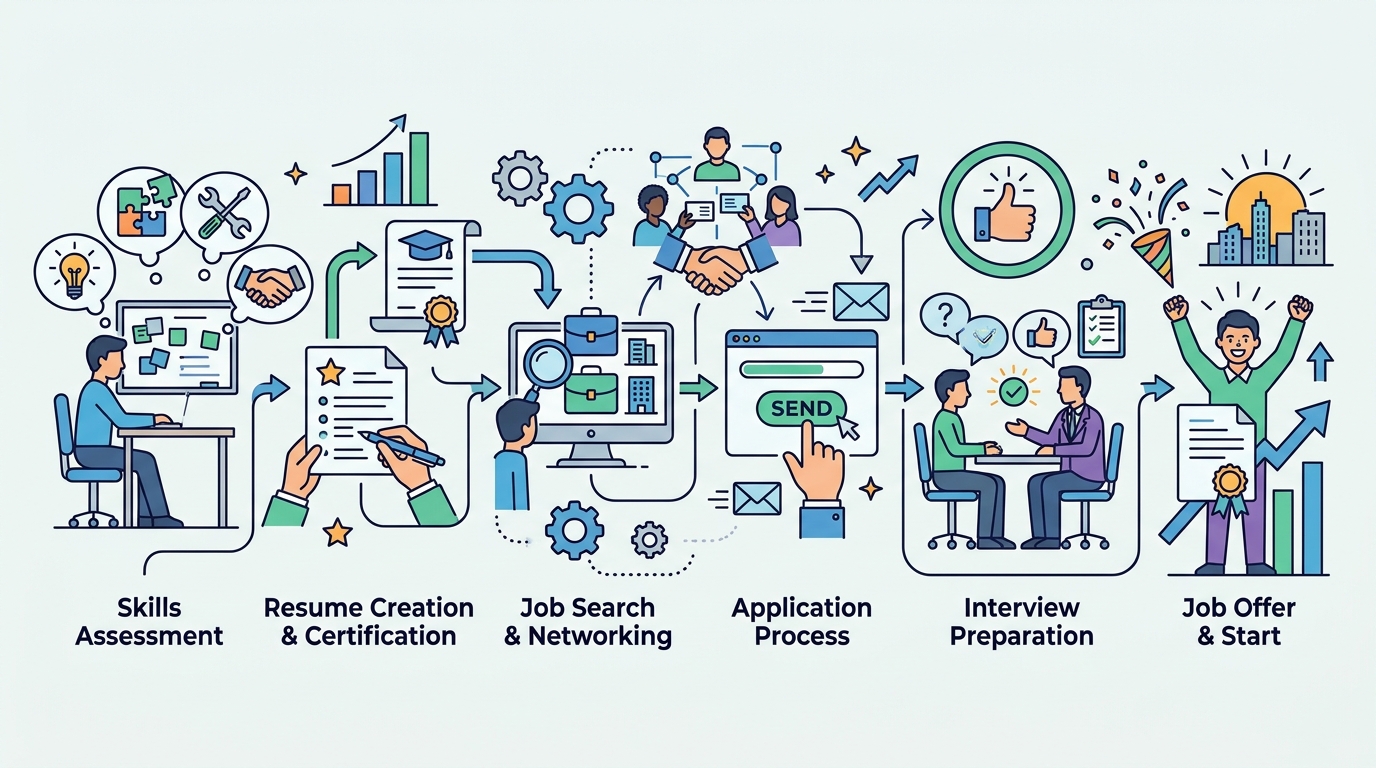
How to Get an Entry-Level Job With No Experience: Step-by-Step Guide
You can get hired into an entry-level job without paid work history, but you have to replace experience with evidence: coursework, volunteering, caregiving, side projects and short certifications that show you can do specific tasks. The work is front-loaded — one solid resume, one target list, a few rehearsed stories — and then repeated at volume until something lands.

How to Explain a Resume Gap (With Examples)
A resume gap is any period when you were not formally employed, and it is addressed by showing how you used that time and which relevant experience you kept (Indeed Career Guide, 2026-05-18). You have three separate chances to explain it: a short entry on the resume, a fuller paragraph in the cover letter, and a rehearsed answer in the interview (Novorésumé, 2026-02-24).

How to Write a Resume With No Work Experience
A resume with no paid work history needs the same bones as any other: contact information, a summary, and evidence you can do the work. CareerOneStop (U.S. Department of Labor) lists those as core resume sections and defines the summary as three to four top accomplishments or skills (undated).

How to Answer 'What Is Your Greatest Weakness?'
The weakness question is one of the most frequent things employers ask in interviews (ResumeTrick), and it is less about the flaw you name than about whether you can assess your own performance honestly and act on it. A strong answer has three parts: a genuine weakness, the specific strategy you are using to improve, and evidence of progress (Mitsuoka & Company).
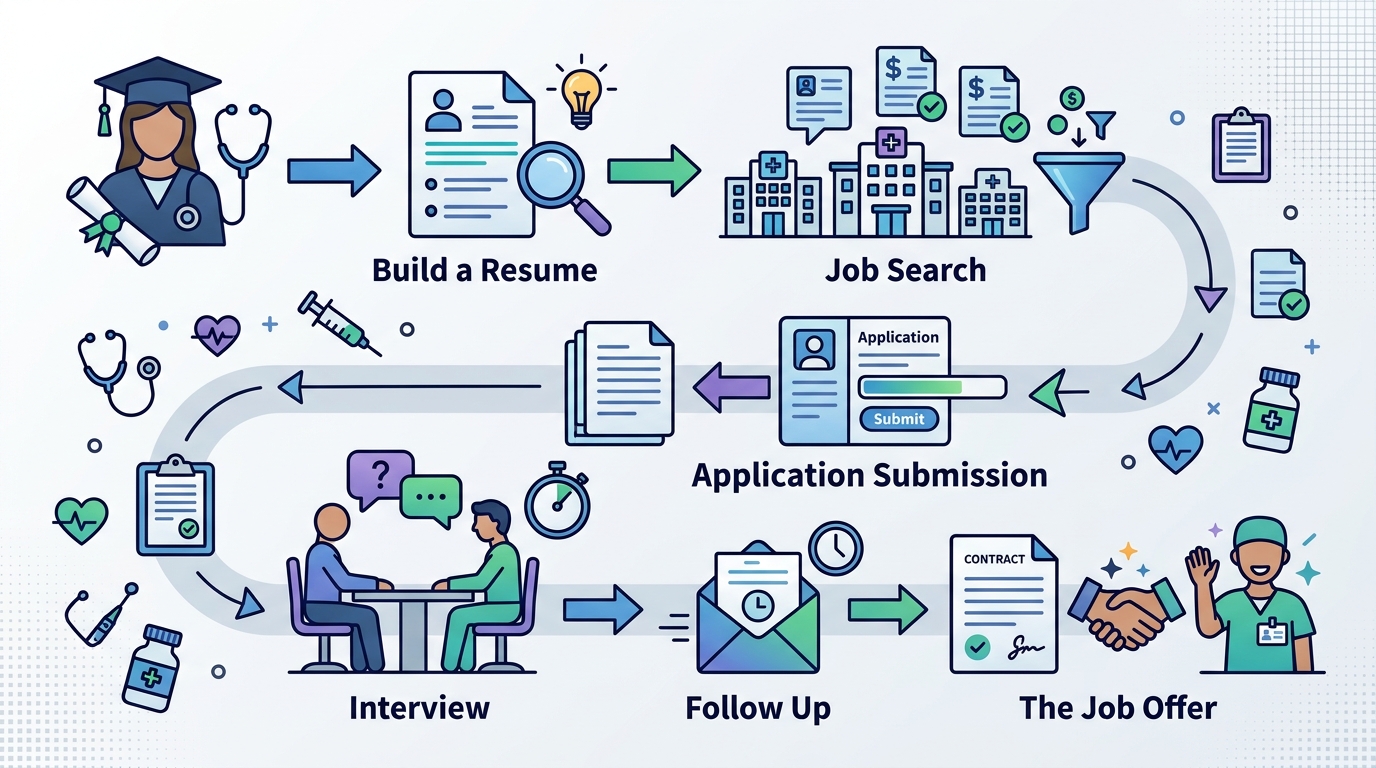
Nursing Job Search Roadmap: From New Grad to First Offer
Most new grad nurses land their first role by working two tracks at once: the licensing track (program completion, NCLEX-RN, state board requirements) and the hiring track (nurse residency cohorts, unit postings, interviews). Because many hospital new-graduate residencies run as 12-month programs with fixed cohort start dates (as described on hospital employer career sites), timing your applications matters as much as the strength of your resume.