Is a Career in Cybersecurity Right for You?
From triaging overnight SIEM alerts to writing breach reports for executives, here is what security work asks of you before you commit to it.
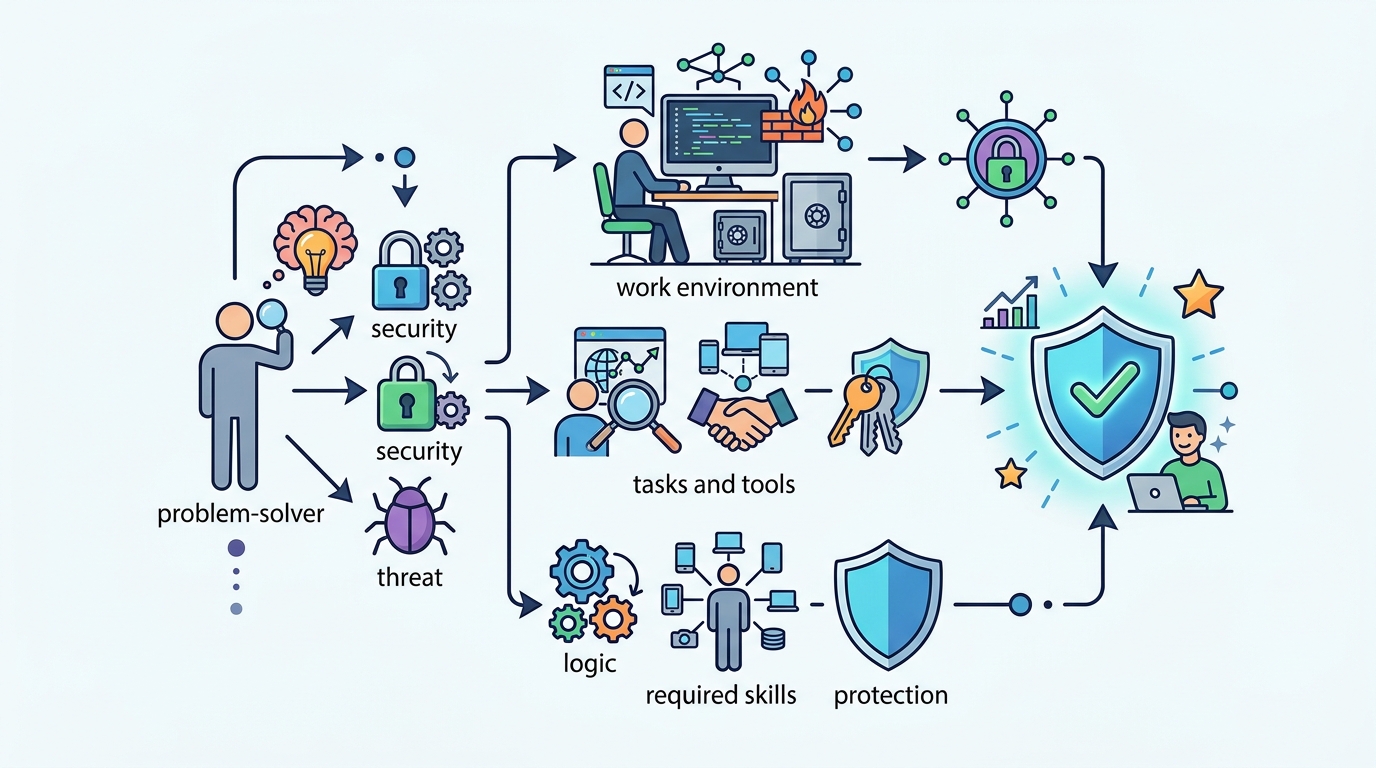
Cybersecurity suits people who notice small anomalies, enjoy taking systems apart to find weaknesses, and can explain a risk to a manager who does not speak in acronyms. Day to day, information security analysts monitor networks for breaches, maintain firewalls and encryption software, check for vulnerabilities, prepare reports on attacks, and help build the organization's disaster recovery plan (U.S. Bureau of Labor Statistics, 2025).
It is less suited to people who want predictable hours. Most analysts work full time, some work more than 40 hours a week, and many are on call outside business hours in case of an emergency (U.S. Bureau of Labor Statistics, 2025).
What a Cybersecurity Analyst Actually Does
Most days start with the alert queue. You pick up what the overnight shift escalated in the SIEM, decide which alerts are false positives and which need investigation, and check current reports of computer viruses to decide whether virus protection systems need updating (O*NET OnLine, U.S. Department of Labor). A failed-login cluster from an unfamiliar country gets traced through authentication logs before the morning standup.
Mid-morning is usually vulnerability work: running or reviewing scans, confirming which findings are real, and opening tickets with the system administrators who own the affected servers. Some of it is maintenance — firewall rule changes, certificate renewals, keeping encryption software current (U.S. Bureau of Labor Statistics, 2025).
Afternoons shift toward writing. Analysts prepare reports on attacks and breaches, develop security standards, and recommend security enhancements to management (U.S. Bureau of Labor Statistics, 2025). That means translating a technical finding into something a finance director can act on. Analysts are also heavily involved in creating the organization's disaster recovery plan, and develop plans to safeguard computer files against accidental or unauthorized modification, destruction, or disclosure (U.S. Bureau of Labor Statistics, 2025; O*NET OnLine).
Across the whole occupation, the work is to plan, implement, upgrade, or monitor security measures protecting computer networks and information, and to assess system vulnerabilities and propose risk mitigation strategies (O*NET OnLine). The proportions change with the employer: a consulting firm leans toward assessment and reporting, an in-house team leans toward monitoring and maintenance.
Signs This Career Might Fit You
- You notice small changes other people ignore. Cyberattacks may be difficult to detect, so analysts must pay careful attention to computer systems and watch for minor changes in performance (U.S. Bureau of Labor Statistics, 2025) — a server responding slightly slower than usual can be the first thread worth pulling.
- You can be trusted with access you could abuse. O*NET lists Integrity, a tendency to be honest and ethical at work, among the occupation's top work styles; you will hold credentials that open mailboxes, HR files and payroll systems.
- You like writing things down properly. Preparing reports on security breaches and developing security standards for the organization are named duties (U.S. Bureau of Labor Statistics, 2025), and a sloppy incident write-up costs the next analyst hours.
- You can explain a technical risk without acronyms. Communication skills are listed as important because analysts must explain information security needs to non-technical staff (U.S. Bureau of Labor Statistics, 2025) — including the manager who wants an exception to the password policy.
- You think like an attacker. Creative and problem-solving skills are named qualities (U.S. Bureau of Labor Statistics, 2025); assessing system vulnerabilities means imagining the route into a network nobody designed for.
- You already enjoy IT troubleshooting. Many analysts have prior experience in an IT department, often as a network and computer systems administrator (U.S. Bureau of Labor Statistics, 2025), and entry roles such as help desk and junior SOC analyst reward ticket triage and operating-systems knowledge (cyber.careers).
- You keep studying after hours. Researching new IT security trends is part of the job, not an extra (U.S. Bureau of Labor Statistics, 2025).
Signs This Career Might Not Fit You
- You need your evenings fixed. Most analysts work full time, some more than 40 hours a week, and are sometimes on call outside normal business hours in case of an emergency (U.S. Bureau of Labor Statistics, 2025); a ransomware alert late at night does not wait for Monday.
- You want to be outdoors or moving. This is screen work — hours in a SIEM console, log files and spreadsheets of vulnerability findings, usually in an office or a security operations center.
- Repetitive checking bores you quickly. Monitoring current reports of computer viruses to determine when to update virus protection systems (O*NET OnLine) is a routine task, and most alerts turn out to be nothing.
- You dislike writing and documentation. Report preparation and disaster recovery planning are duties, not optional extras (U.S. Bureau of Labor Statistics, 2025).
- You want to skip the IT groundwork. A typical pathway starts with roughly zero to two years in help desk/IT support, systems or network administration, or a junior SOC analyst role before specialization (Marshall University).
- You take blame badly. When a breach happens, you will write the report that explains what was missed and recommend the enhancements that should have been in place.
A Day in the Life
| Time block | Typical task | Who you interact with |
|---|---|---|
| 7:30am–8:30am | Shift handover; read overnight escalations and open incident tickets | Night-shift SOC analysts, on-call engineer |
| 8:30am–10am | Triage SIEM alerts; check current virus and threat reports to decide on protection updates | Security team lead, endpoint administrators |
| 10am–12pm | Review vulnerability scan results, confirm real findings, raise patching tickets | System and network administrators, application owners |
| 12pm–1pm | Lunch; read threat intelligence feeds and vendor advisories | Usually alone, or peers in a chat channel |
| 1pm–3pm | Maintain firewalls and encryption software; process change requests | Network engineers, change advisory board |
| 3pm–4:30pm | Write breach or incident reports; draft security standards and recommended enhancements | Managers, compliance or risk staff, non-technical department heads |
| 4:30pm–5:30pm | Disaster recovery plan work or tabletop exercise prep; handover notes | IT operations, business continuity contacts |
| Evenings/weekends (rotation) | On-call response to emergencies outside business hours (U.S. Bureau of Labor Statistics, 2025) | On-call manager, affected system owners |
How to Get Started
- Get the IT foundation first (roughly zero to two years). Take an entry-level role such as help desk, IT support, systems or network administrator, or junior SOC analyst; these are the standard first rungs, with networking, ticket triage and operating systems as the core skills (Marshall University; cyber.careers). Many analysts come from exactly this background, often as a network and computer systems administrator (U.S. Bureau of Labor Statistics, 2025).
- Check the education expectation before enrolling in anything (a couple of weeks of reading). The U.S. Bureau of Labor Statistics (2025) publishes the typical entry-level education for information security analysts in its Occupational Outlook Handbook — read that entry, plus job postings in your state, before committing to a degree or bootcamp.
- Earn a foundational certification (a few months of part-time study). ISC2's Certified in Cybersecurity (CC) is an entry-level certification for people starting a cybersecurity career; it requires no prior work experience and covers security principles, business continuity, access controls, network security and security operations (ISC2).
- Add CompTIA Network+, then Security+ (several months of study). Security+ has no formal prerequisites, but CompTIA recommends at least two years of IT administration experience with a security focus and suggests Network+ first (CompTIA). The current SY0-701 exam has a maximum of 90 multiple-choice and performance-based questions, a 90-minute time limit and a passing score of 750 on a 100–900 scale, and the certification is valid for three years (Total Seminars).
- Apply for monitoring roles while the certification is current (expect a search measured in months). Target SOC analyst and junior security analyst titles at computer companies, consulting firms, and business and financial companies, which employ most analysts (U.S. Bureau of Labor Statistics, 2025). CyberSeek data cited by Marshall University counts a large number of national openings against a limited supply of workers, with cybersecurity roles taking longer to fill than other IT jobs.
- Specialize for roughly three to seven years in a track such as incident response, cloud security or governance (Marshall University), then pursue CISSP if you want senior work: it requires a minimum of five years of cumulative, full-time experience in at least two of the eight CISSP domains, with one year waived by a post-secondary degree or one approved credential (ISC2). Pass the exam early and you can become an Associate of ISC2, with six years to earn the required experience (ISC2).
- Plan the next move. Analysts advance by leading a team, becoming an expert in a specialty area, or moving up to chief security officer or another computer and information systems manager role (U.S. Bureau of Labor Statistics, 2025).
Frequently asked questions
Do I need a degree to work in cybersecurity?
Check the typical entry-level education that the U.S. Bureau of Labor Statistics publishes for information security analysts (2025) — expectations vary by employer and state. Many employers also prefer candidates holding an information security certification, and some certifications are aimed specifically at entry-level workers (U.S. Bureau of Labor Statistics, 2025).
Which cybersecurity certification should I start with?
ISC2's Certified in Cybersecurity (CC) requires no prior work experience and covers security principles, access controls, network security and security operations. CompTIA Security+ is the other common starting point, though CompTIA recommends at least two years of security-focused IT administration experience and suggests taking Network+ first.
How much do information security analysts earn?
The U.S. Bureau of Labor Statistics publishes a median pay figure for information security analysts in its 2025 Occupational Outlook Handbook; look it up there for the current number. Pay is normally salaried, varies by state, employer type and industry, and on-call rotations are compensated differently by each employer.
Is cybersecurity a 9-to-5 job?
Not reliably. Most information security analysts work full time, some work more than 40 hours a week, and they are sometimes on call outside normal business hours in case of an emergency (U.S. Bureau of Labor Statistics, 2025). Security operations centers often run shift coverage, including nights and weekends.
How long does it take to get a CISSP?
CISSP requires a minimum of five years of cumulative, full-time experience in at least two of the eight domains; a post-secondary degree or one approved credential waives one year (ISC2). Pass the exam first and you become an Associate of ISC2, with six years to accumulate the required experience.
Sources
- U.S. Bureau of Labor Statistics — Information Security Analysts : Occupational Outlook Handbook (2025)
- O*NET OnLine (U.S. Department of Labor) — 15-1212.00 - Information Security Analysts