So You Want to Be an Electrician: Is It a Good Fit?
Most electricians learn on the job in a paid apprenticeship, so the real question is less about school than whether the work itself suits you day to day.
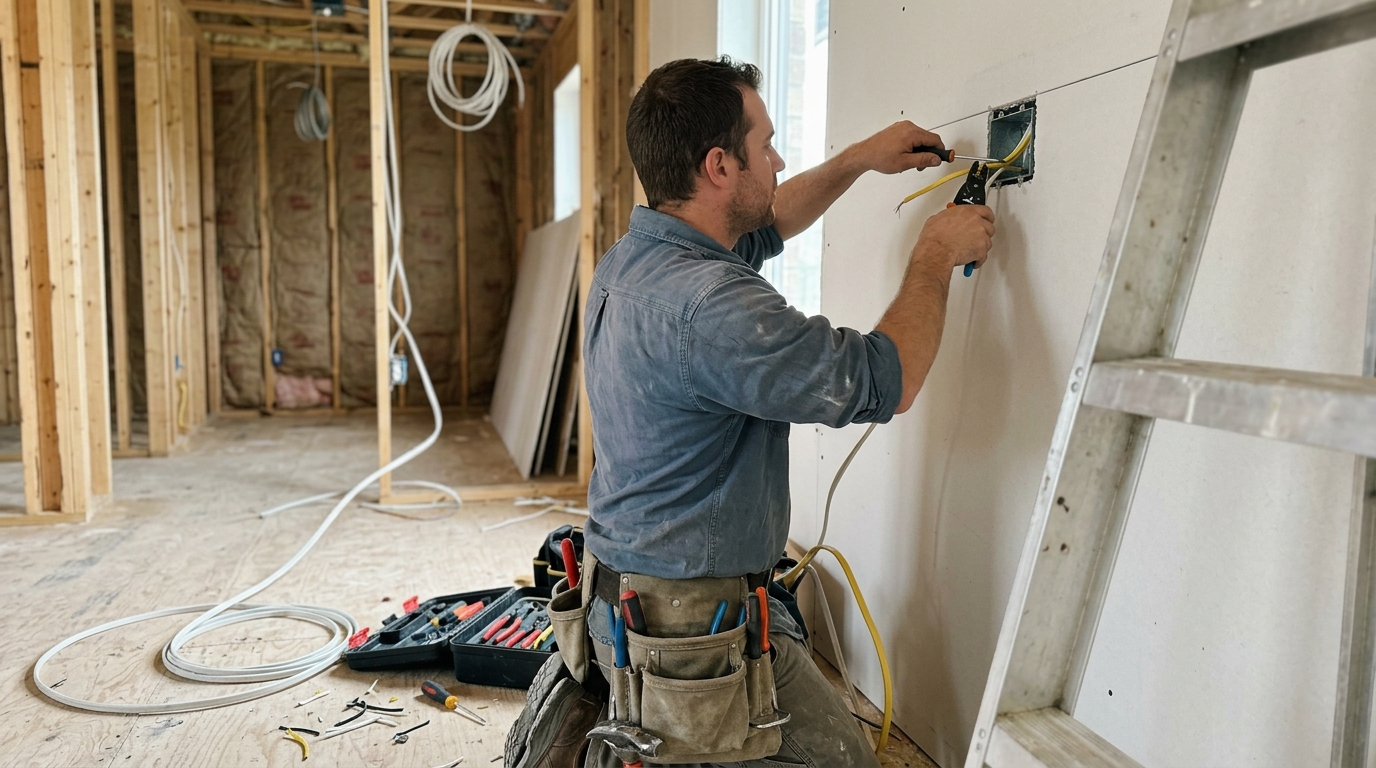
Being an electrician suits you if you like diagnosing a problem with a multimeter more than discussing it in a meeting, and if you can accept standing, kneeling and working in cramped spaces as a normal part of the day (U.S. Bureau of Labor Statistics, 2026-08). The work is hands-on and code-driven: you read blueprints, install and maintain wiring and lighting systems, test components, and replace what has failed (U.S. Bureau of Labor Statistics, 2026-08).
Entry is through a high school diploma or equivalent followed by an apprenticeship, typically three or four years of paid on-the-job training plus classroom instruction, and most states then require a licensing exam covering the National Electrical Code (U.S. Bureau of Labor Statistics, 2026-08; O*NET OnLine, undated).
What an Electrician Actually Does
A typical day starts before the job site does. You load conduit, wire spools, a drill and your meters, then review the blueprints and panel schedules for the area you're wiring that day so you know where the home runs and device boxes go (U.S. Bureau of Labor Statistics, 2026-08).
On site, the morning usually goes to installation: laying out box heights, bending and mounting conduit, drilling and pulling circuits back to the panel. If you work for a large contractor you do this as part of a crew, and as you gain experience you direct helpers and apprentices on the tasks that make up the job (U.S. Bureau of Labor Statistics, 2026-08).
Afternoons swing toward inspecting and testing. You check electrical components for defects, use testing devices to trace a circuit that won't energize, and repair or replace the wiring, fixture or piece of equipment behind the fault (U.S. Bureau of Labor Statistics, 2026-08). Service work adds a customer conversation to every call: explaining what you found, what it will take to fix, and what you cannot legally leave in place under code.
The setting changes with the job. Electricians work indoors and outdoors at homes, businesses, factories and construction sites, sometimes in cramped spaces such as crawlspaces and attics, and long periods of standing and kneeling can be tiring (U.S. Bureau of Labor Statistics, 2026-08).
Signs This Career Might Fit You
- You like finding the fault, not just replacing the part: troubleshooting skills are listed among the important qualities for electricians, because a dead receptacle could be a loose terminal, a tripped device or a break upstream, and you have to test your way to the answer (U.S. Bureau of Labor Statistics, 2026-08).
- You are deliberate before you are fast: O*NET lists Cautiousness, Attention to Detail and Dependability as the top three work styles for the occupation — the habits that show up as de-energizing and verifying a circuit before you put a hand in a panel.
- Diagrams make sense to you: reading blueprints and technical diagrams is a core task, and a panel schedule or riser diagram has to tell you where a circuit goes before you cut anything (U.S. Bureau of Labor Statistics, 2026-08).
- You can distinguish wire colors reliably: color vision is named as an important quality because conductors are identified by the color of their insulation (U.S. Bureau of Labor Statistics, 2026-08).
- Physical work agrees with you: physical stamina and strength matter, including moving components that may weigh up to 50 pounds and kneeling to mount boxes at floor level (U.S. Bureau of Labor Statistics, 2026-08).
- You can explain a problem to a homeowner without jargon: customer-service skills are listed among the qualities electricians need, because service calls end with you telling someone what failed and what the repair involves (U.S. Bureau of Labor Statistics, 2026-08).
- Mechanical and hands-on interests pull at you: O*NET gives the occupation a Realistic-Conventional interest code with interest areas in Mechanics/Electronics, Physical/Manual Labor and Engineering.
Signs This Career Might Not Fit You
- You want predictable hours: almost all electricians work full time, schedules may include evenings and weekends, and overtime is common — a service call or a shutdown gets fixed when it breaks, not when your shift ends (U.S. Bureau of Labor Statistics, 2026-08).
- Tight, dirty spaces bother you: the job takes place indoors and outdoors at homes, factories and construction sites, occasionally in cramped spaces, with long periods of standing and kneeling that can be tiring (U.S. Bureau of Labor Statistics, 2026-08).
- You would rather not manage physical risk daily: common injuries include electrical shocks, falls and burns, and the work requires protective clothing, safety glasses and sometimes hearing protection (U.S. Bureau of Labor Statistics, 2026-08).
- You want to skip the training years: O*NET classifies electricians as Job Zone Three, noting three or four years of apprenticeship or several years of vocational training plus, often, a licensing exam — there is no short route to working unsupervised.
- Rules feel like obstacles: most states require you to pass a licensing test covering the National Electrical Code and state and local codes, and inspection failures mean doing the work again (U.S. Bureau of Labor Statistics, 2026-08).
- You prefer solo, self-paced work: electricians at large companies typically work as part of a crew and may be responsible for directing helpers and apprentices through a job (U.S. Bureau of Labor Statistics, 2026-08).
A Day in the Life
Hours vary by employer and sector: new-construction crews often start early and finish mid-afternoon, while service and industrial maintenance work can run into evenings and weekends, and overtime is common (U.S. Bureau of Labor Statistics, 2026-08). A construction-side day often looks like this.
| Time block | Typical task | Who you interact with |
|---|---|---|
| 6:00am-6:30am | Load conduit, wire, drill and testing meters; check the day's prints and panel schedules | Shop foreman, warehouse staff |
| 6:30am-7:00am | Drive to site, toolbox talk, put on safety glasses and other protective gear | Crew, site safety lead |
| 7:00am-9:30am | Lay out box and device heights from the blueprint, mount boxes, begin bending and hanging conduit | Journey workers, apprentices you direct |
| 9:30am-11:30am | Pull circuits back to the panel, label home runs | Apprentices, helpers |
| 11:30am-12:00pm | Lunch, often on site | Crew |
| 12:00pm-2:30pm | Terminate devices, inspect components for defects, test circuits and trace a fault with a meter | General contractor, other trades sharing the wall cavity |
| 2:30pm-3:30pm | Correct anything flagged against the National Electrical Code, walk the area with the inspector or foreman | Electrical inspector, foreman |
| 3:30pm-4:00pm | Clean up, restock the truck, log hours and materials | Crew, office or dispatch |
| Evenings / weekends (as called) | Service calls, repairs or plant shutdown work; explain findings and repairs to the customer | Homeowners, building managers, plant maintenance staff |
How to Get Started
- Finish high school or earn an equivalent credential (timeline varies; GED preparation commonly takes 2-6 months). A high school diploma or equivalent is required to enter the trade (U.S. Bureau of Labor Statistics, 2026-08). Algebra, shop and any electronics coursework help with conduit bends and load calculations.
- Test the work before you commit (a few weeks to a few months). Hire on as an electrician's helper or a construction laborer, or take a pre-apprenticeship or vocational electrical course at a community or technical college. You will know quickly whether kneeling in a crawlspace and pulling wire all day suits you.
- Apply to a Registered Apprenticeship (applications often open on a set cycle, so allow several months). O*NET lists apprenticeship titles for this occupation including Electrician, Electrician (Maintenance), Residential Wireman and Marine Electrician, vetted by industry and approved by the U.S. Department of Labor. Pick the one matching the work you want: residential, commercial, industrial maintenance or marine.
- *Complete the apprenticeship: three or four years (ONET OnLine, undated).** Each year combines paid on-the-job training hours with technical instruction in the classroom (U.S. Bureau of Labor Statistics, 2026-08). You earn while you learn, starting on basic tasks and moving to layout, terminations and troubleshooting.
- Pass your state's licensing exam (study typically takes 1-3 months after your hours are complete). Most states require electricians to pass a test and hold a license; requirements vary by state and the exam covers the National Electrical Code plus state and local electrical codes (U.S. Bureau of Labor Statistics, 2026-08). Check your own state's rules through CareerOneStop's licensing information before you plan around a date (U.S. Bureau of Labor Statistics citing CareerOneStop, 2026-08).
- Work as a journey worker (your first unsupervised title). After completing an apprenticeship you are considered a journey worker and may perform duties on your own, subject to local or state licensing requirements (U.S. Bureau of Labor Statistics, 2026-08). Most electrician jobs sit with electrical contractors and other wiring installation contractors, which employed 66% of electricians in 2025 (U.S. Bureau of Labor Statistics, 2025).
- Add master electrician status and specialty certifications (typically additional years of experience). After meeting further requirements, journey workers may advance to master electrician (U.S. Bureau of Labor Statistics, 2026-08); CareerOneStop also lists certifications available in the field (U.S. Bureau of Labor Statistics citing CareerOneStop, 2026-08).
Frequently asked questions
How long does it take to become an electrician?
Plan on three to four years of apprenticeship, or several years of vocational training, before you work unsupervised — O*NET classifies electricians as Job Zone Three, 'Medium Preparation Needed.' Each apprenticeship year combines paid on-the-job hours with technical instruction (U.S. Bureau of Labor Statistics, 2026-08).
Do you need a license to work as an electrician?
Most states require electricians to pass a test and be licensed, and the exam covers the National Electrical Code plus state and local codes. Requirements vary by state, so check your state licensing board through CareerOneStop (U.S. Bureau of Labor Statistics citing CareerOneStop, 2026-08).
How much do electricians earn?
Pay is usually hourly, often set by apprenticeship step or a collective agreement, with overtime common. In May 2025 the highest-paid 10 percent of electricians earned more than $108,510 (U.S. Bureau of Labor Statistics). Check the current median and your state's figures in BLS Occupational Employment and Wage Statistics data.
Is there work available for new electricians?
The Bureau of Labor Statistics projects employment of electricians to grow much faster than the average for all occupations from 2025 to 2035, with most annual openings coming from workers transferring occupations or leaving the labor force. Openings concentrate with electrical contractors, who employed 66% of electricians in 2025.
Can you be an electrician if you are colorblind?
Color vision is listed among the important qualities because conductors are identified by insulation color (U.S. Bureau of Labor Statistics, 2026-08). Vision requirements for apprenticeship entry vary by program and state, so ask the specific Registered Apprenticeship sponsor before applying.
Sources
- U.S. Bureau of Labor Statistics — Electricians : Occupational Outlook Handbook (2026-08)
- O*NET OnLine (sponsored by U.S. Department of Labor) — 47-2111.00 - Electricians