Truck Driver Pay Guide: Salary Ranges and Factors
How mileage rates, endorsements, employer type and your home state shape a trucking paycheck — plus exactly where to look up the current published figures.
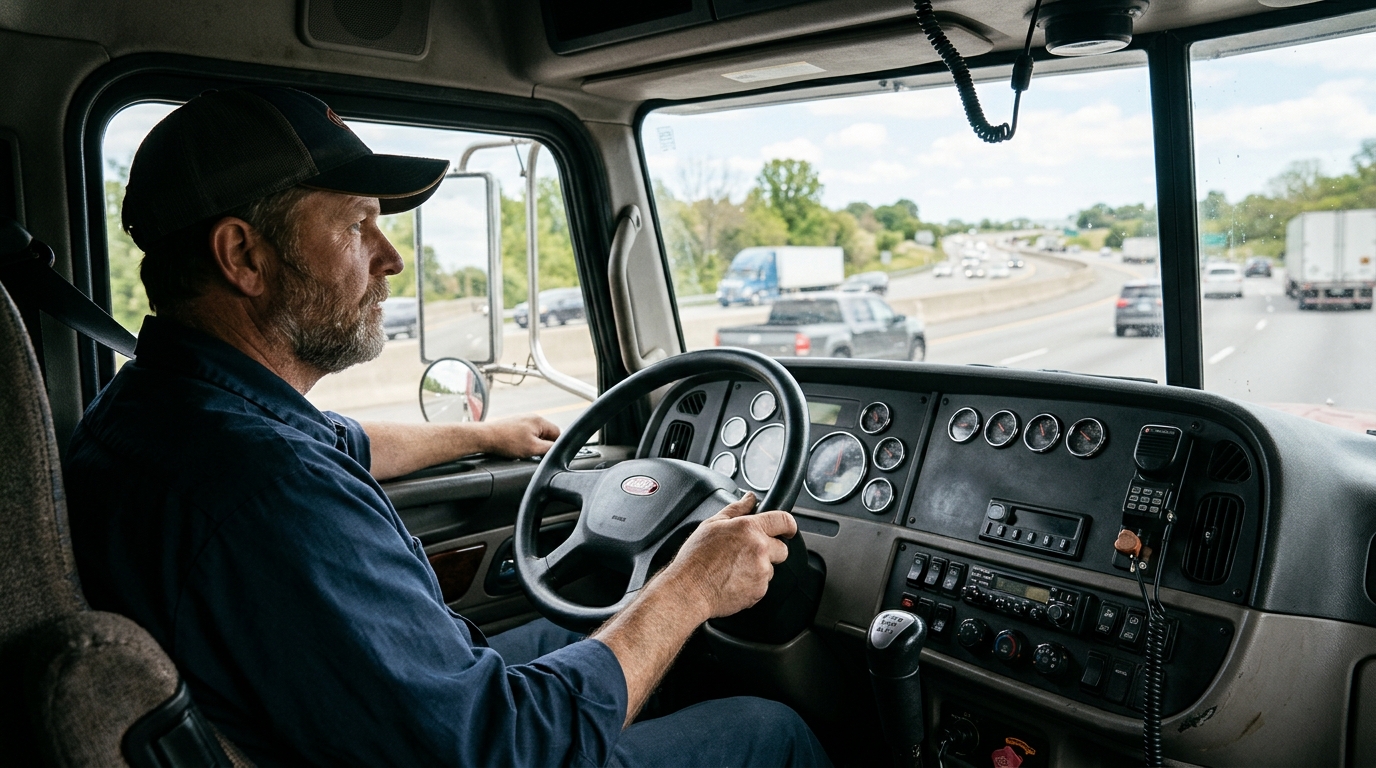
Most heavy and tractor-trailer truck drivers are paid by how many miles they have driven, plus bonuses, and the per-mile rate varies by employer, cargo type and driver experience (U.S. Bureau of Labor Statistics, 2025-05). The Bureau publishes a median annual wage for the occupation for May 2025 along with 10th and 90th percentile figures, so you can see the middle of the market and both ends of it.
Where you live matters as much as who you drive for: Alaska reports the highest state median wage for the occupation, followed by Washington and the District of Columbia, while Louisiana reports the lowest among the states compared (Nuecareer and TruckDriversSalary.com, both citing BLS OEWS, 2025-05).
What the Typical Truck Driver Earns
The headline figure to look up is the median annual wage for heavy and tractor-trailer truck drivers, published by the U.S. Bureau of Labor Statistics for May 2025. Median means the midpoint: half of drivers earned more, half earned less. It is not the mean (average), which a small group of very high earners can pull upward. Where a jobs site quotes an "average salary," check which one it means before comparing it with BLS data. This guide uses medians throughout unless stated otherwise.
Alongside the median, BLS publishes the two tails for May 2025: an amount the lowest-paid 10 percent earned less than, and an amount the highest-paid 10 percent earned more than. Those are the practical floor and ceiling of the occupation. For context, BLS also publishes a median annual wage across all occupations in the U.S. economy for the same month — that is the comparison to use if you are weighing trucking against another field.
BLS also breaks the occupation down by industry, with separate May 2025 medians for truck transportation (the largest employing industry), wholesale trade, manufacturing and construction. Those four medians differ, so the industry you drive in changes the midpoint you are measured against.
Treat any national number as a starting point. Alaska reports the highest state median and Louisiana the lowest among the states compared (Nuecareer and TruckDriversSalary.com, citing BLS OEWS, 2025-05), so no single national figure describes both. And because pay is usually per mile plus bonuses (BLS, 2025-05), an annual figure reflects the miles you actually ran. Do not convert a published annual wage to an hourly rate without stating your own assumption about hours per week and weeks per year.
Pay by Experience Level
Trucking has no formal pay grades. What moves earnings is the per-mile rate, the miles you are dispatched and the bonuses you qualify for — and BLS states the per-mile rate varies by employer, cargo type and driver experience (2025-05). Price each tier below against the BLS May 2025 percentiles.
| Stage | What separates it | Where pay usually sits |
|---|---|---|
| Entry-level (first 1-2 years) | CDL held; often a 3-to-6-month private or community college program completed (BLS). Trainee or team driving, no endorsements. | Lower end of the May 2025 BLS distribution, nearest the published 10th-percentile figure. |
| Mid-career (about 2-5 years) | Clean record, solo regional or over-the-road work, often a HAZMAT or tanker endorsement; eligible for safety and mileage bonuses. | Around the BLS May 2025 median, adjusted for which industry median applies. |
| Experienced / senior (5+ years) | Specialised freight, dedicated accounts, trainer duties, or owner-operator work paid as a share of shipping revenue (BLS). | Upper end, toward the published 90th-percentile figure for May 2025. |
Do not accept an entry-level and an experienced figure collapsed into one "typical driver salary" in a job ad. Ask for cents per mile, average weekly miles on that lane, and which bonuses are guaranteed.
What Affects Pay
- Pay structure. Drivers are usually paid by miles driven plus bonuses; owner-operators are sometimes paid a share of shipping revenue instead (BLS, 2025-05). A fraction of a cent per mile multiplies across every mile, so compare rate and weekly miles together.
- Industry. BLS publishes four distinct May 2025 medians for this occupation — truck transportation, wholesale trade, manufacturing and construction. Check which one your prospective employer sits in before judging an offer.
- State. Alaska reports the highest state median, followed by Washington and the District of Columbia; Louisiana reports the lowest among states compared (Nuecareer and TruckDriversSalary.com, citing BLS OEWS, 2025-05). The spread between those ends is the largest single geographic gap in the data.
- Endorsements and cargo. Hauling hazardous materials requires a HAZMAT endorsement, which means an extra knowledge test and a background check (BLS). Because it narrows the pool of eligible drivers, it is the clearest endorsement-level lever on the per-mile rate, which BLS says varies by cargo type.
- Hours-of-service limits. You may not work more than 14 hours straight, of which up to 11 may be driving, with at least 10 hours off between working periods; you are capped at 60 hours in 7 days or 70 in 8 days, then 34 hours off (BLS citing FMCSA). Those caps limit how many paid miles a week can contain.
- Experience and record. The per-mile rate varies by driver experience (BLS, 2025-05), and a clean safety record is what keeps safety and performance bonuses in play.
Pay by State or Metro Area
Ordered from the highest reported state median to the lowest. Pull the current dollar figure for each row from the BLS OEWS state tables for heavy and tractor-trailer truck drivers.
| State or area | Rank | Note |
|---|---|---|
| Alaska | Highest reported state median | Remote routes and resource-sector freight |
| Washington | Second | Port and distribution freight |
| District of Columbia | Third | Small, mainly local and regional market |
| Texas | Mid-range; a state median plus a 25th-to-75th-percentile range is published | Large market, wide metro spread inside the state |
| Louisiana | Lowest reported median among states compared | Use as the realistic low end of a national figure |
Sources: Alaska, Washington and District of Columbia ranking from Nuecareer citing BLS OEWS, 2025-05; Louisiana from TruckDriversSalary.com citing BLS OEWS, 2025-05; Texas median and middle-50% range from GetCDLTexas.com citing BLS OEWS (Texas), 2025-05. These are annual medians, not hourly rates.
How to Increase Your Earnings
- Get the CDL cleanly. All long-haul drivers must hold a commercial driver's license; qualifications vary by state but generally include a knowledge test and a driving test (BLS). A private school or community college program lasting 3 to 6 months ends in a certificate of completion (BLS).
- Add a HAZMAT endorsement. It requires an extra knowledge test and a background check (BLS) and opens freight fewer drivers can legally haul. Since BLS states the per-mile rate varies by cargo type, ask two carriers for their HAZMAT differential in cents per mile and compare.
- Move to a better-paying industry. BLS publishes separate May 2025 medians for truck transportation, wholesale trade, manufacturing and construction — compare all four against the driving you want.
- Negotiate miles, not only the rate. Because pay is per mile plus bonuses (BLS, 2025-05), get average weekly dispatched miles in writing, plus detention and layover policy. Two offers at the same cents per mile can differ by thousands of miles a month.
- Protect the bonuses. Running legally inside the 11-hour driving limit, 14-hour duty window and 60/70-hour weekly caps (BLS citing FMCSA) is what keeps safety and on-time bonuses payable.
- Price owner-operator work carefully. Owner-operators are sometimes paid a share of shipping revenue rather than per mile (BLS, 2025-05); model truck payment, fuel, insurance and maintenance before assuming a higher gross means higher take-home.
Frequently asked questions
Are truck drivers paid hourly or by salary?
Usually neither. Heavy and tractor-trailer drivers are generally paid by miles driven plus bonuses, with the per-mile rate varying by employer, cargo type and driver experience (U.S. Bureau of Labor Statistics, 2025-05). Local, construction and wholesale driving jobs are more often hourly. When comparing the two, work out the miles your lane produces inside a 60-hour or 70-hour duty week rather than assuming a flat 40.
How does truck driver pay compare with other jobs?
BLS publishes a median annual wage across all occupations in the U.S. economy for May 2025 alongside the occupation median, so you can compare on the same date and basis — both are medians, not averages. Weigh in the duty limits of up to 11 driving hours in a 14-hour window and the nights away from home that over-the-road work involves.
Can new drivers earn as much as experienced ones?
Not usually in year one. BLS states the per-mile rate varies by driver experience (2025-05), and new drivers typically start in trainee or team roles on less desirable lanes, nearer the published 10th-percentile figure for May 2025. After a 3-to-6-month program and one to two clean years, endorsements and bonus tiers open up.
Do owner-operators earn more than company drivers?
Owner-operators are sometimes paid a share of shipping revenue rather than a per-mile rate (BLS, 2025-05), which can show a higher gross than a company driver's wage. Truck payment, fuel, insurance, maintenance and downtime all come out of that gross, so it is not directly comparable to the published May 2025 wage median for the occupation.
Is there enough demand to support pay growth?
BLS publishes a projected employment change for heavy and tractor-trailer truck drivers for 2025-2035, an average number of annual openings over that decade, and the number of jobs the occupation held in 2025. Openings include replacement needs from retirements and career changes, so even modest growth can mean many vacancies each year.
Where should I check current rates before an offer?
Start with BLS OEWS for May 2025 — the national median, the 10th and 90th percentiles, the four industry medians, then your state table. Texas, for example, has a published median plus a 25th-to-75th-percentile middle-50% range, which says more than a midpoint alone. Then ask the carrier for cents per mile, weekly dispatched miles and guaranteed bonuses.
Sources
- U.S. Bureau of Labor Statistics — Heavy and Tractor-Trailer Truck Drivers : Occupational Outlook Handbook (2025-05)
- Nuecareer (citing BLS OEWS) — Truck Driver Salary by State (2026) (2025-05)