Job Descriptions
Job Descriptions guides on Career Forward HQ.

UX Designer Career Path: Education, Steps, and Timeline
Becoming a UX designer means learning to research users, map flows, build interactive prototypes, and test them — then proving it with a portfolio of three to five case studies. There is no license and no single required degree, so entry routes range from a four-year bachelor's in human-computer interaction or design to a self-directed year of courses and practice projects.

How to Become a Bookkeeper Without a Degree
You can enter bookkeeping without a college degree. Most employers screen for double-entry fundamentals, proven accuracy with reconciliations, and hands-on skill in a ledger package such as QuickBooks Online or Xero — all of which you can learn in a few months through self-study, a community college course, or an entry clerk role.
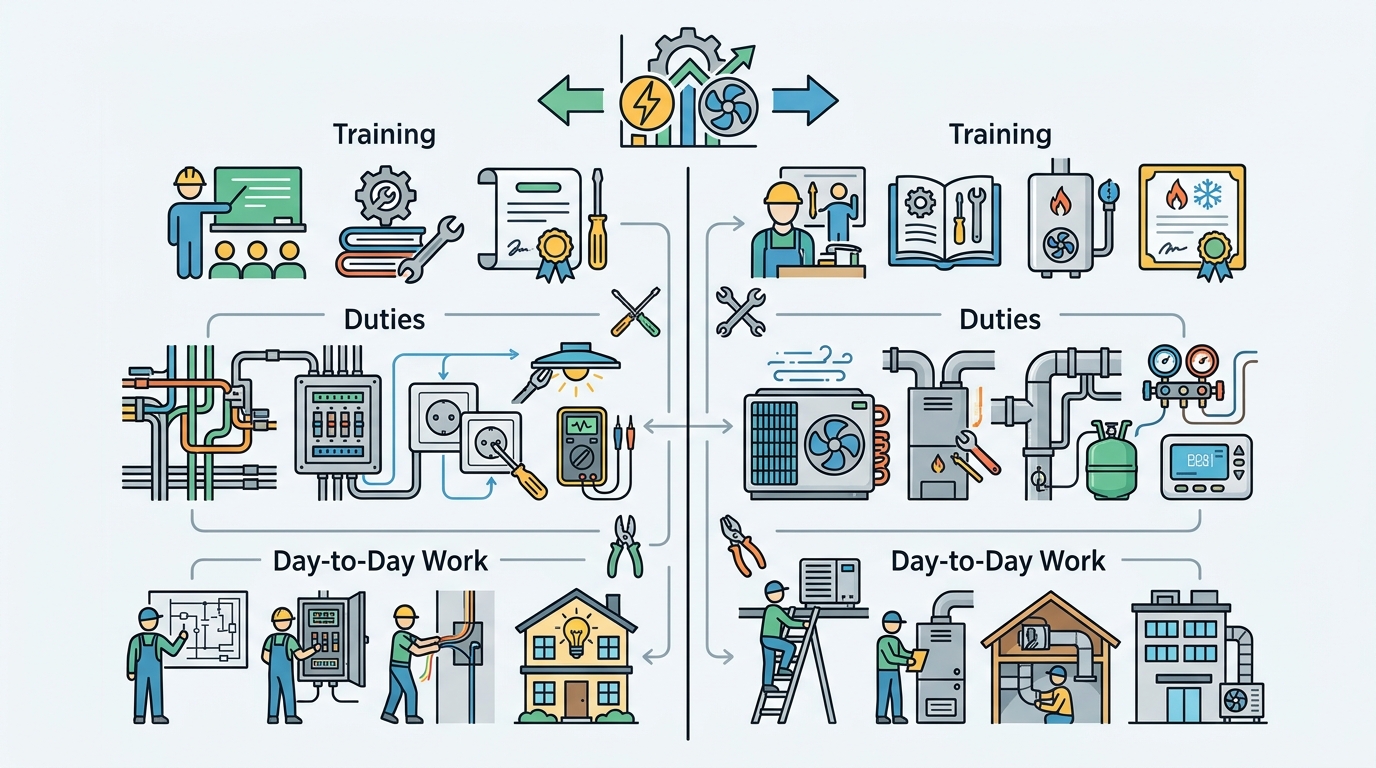
Electrician or HVAC Technician: Comparing Training, Duties, and Day-to-Day Work
Electricians and HVAC technicians overlap more than most trades: both install electrical components, both read drawings, and both spend the day on their feet with hand and power tools. The split comes in what you are responsible for — electricians own the wiring, lighting and power systems of a building, while HVAC technicians own the heating, cooling and refrigeration equipment, including the refrigerant inside it (U.S. Bureau of Labor Statistics, 2025).

What Does a Paralegal Do? Duties, Skills, and Work Environment
A paralegal prepares the work a lawyer signs: investigating the facts of a case, researching statutes and rules, drafting documents, obtaining affidavits, organizing trial exhibits, filing pleadings with court clerks, and calling clients and witnesses to schedule meetings (U.S. Bureau of Labor Statistics, 2026-08-27).
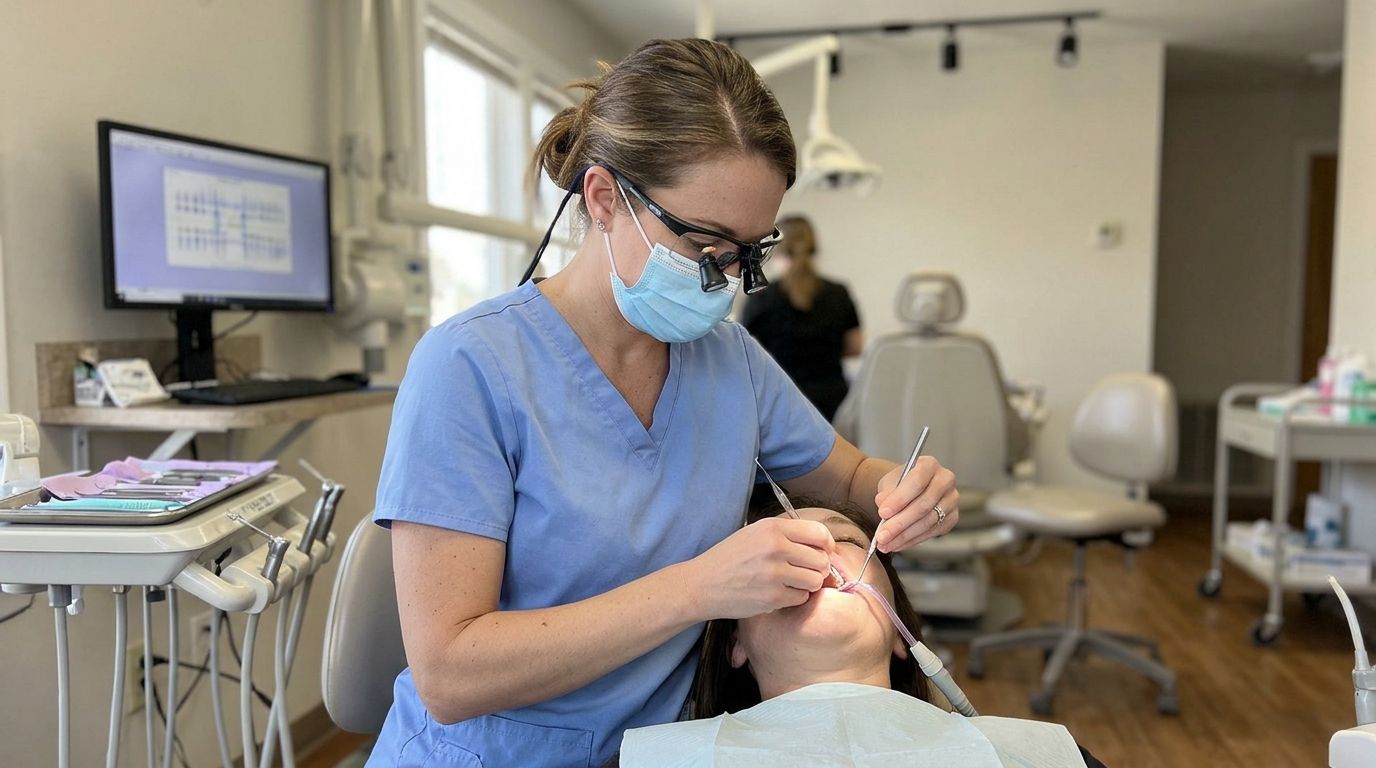
How to Become a Dental Hygienist
Becoming a dental hygienist means completing a dental hygiene program accredited by the Commission on Dental Accreditation, then passing written and clinical examinations and applying to your state board for a licence. An associate's degree is the typical entry-level education for the job (U.S. Bureau of Labor Statistics, 2025), and every state requires hygienists to be licensed, though the exact requirements vary by state (U.S. Bureau of Labor Statistics, 2025).

What Does a Data Analyst Do? A Day in the Life
A data analyst pulls records out of company systems, checks them for errors, and turns them into reports, charts and recommendations that managers use to make decisions. Most of the work is desk-based and done in SQL, a spreadsheet, a scripting language such as Python or R, and a dashboard tool.
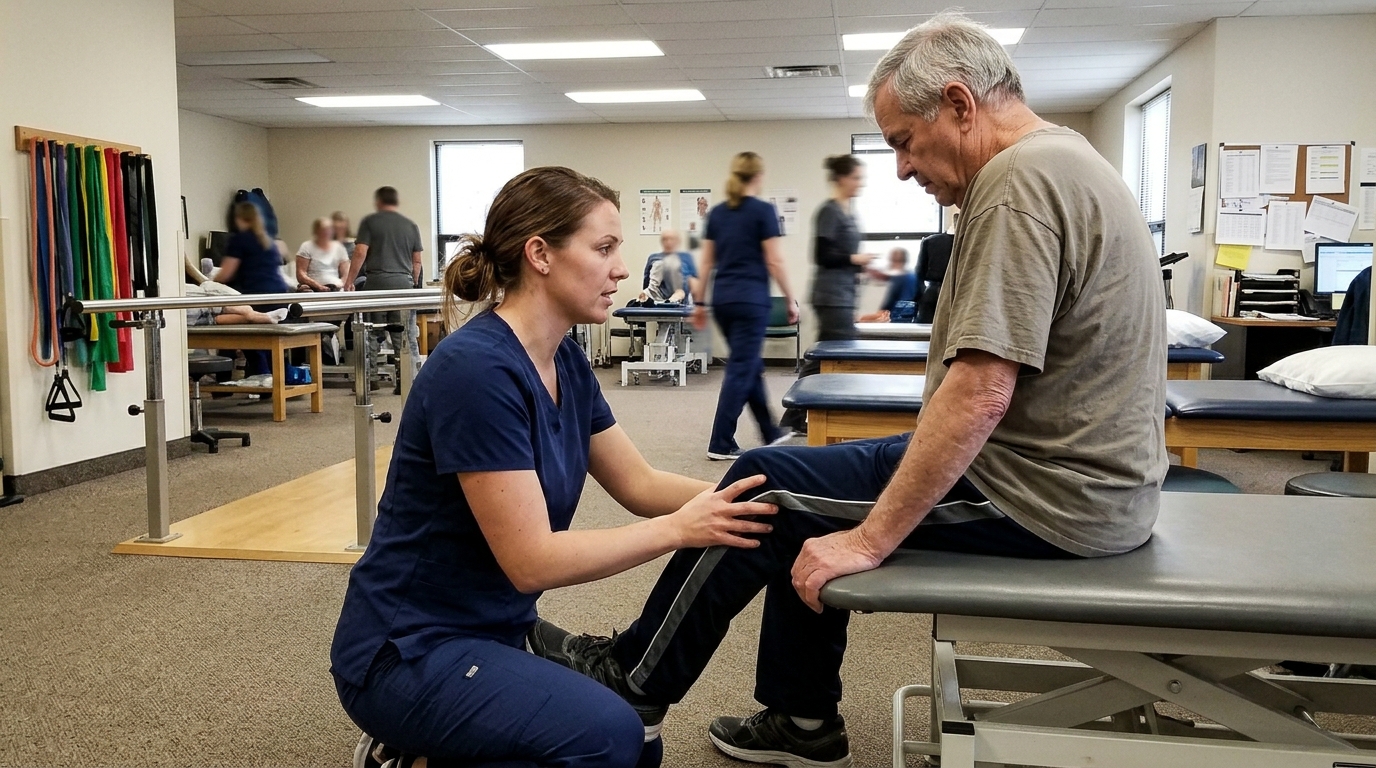
Life as a Physical Therapist Assistant: What to Expect
A physical therapist assistant (PTA) carries out treatment plans written by a physical therapist, guiding patients through exercises, hands-on techniques and mobility training after injury, surgery or illness (U.S. Bureau of Labor Statistics, 2025). It is close-contact, on-your-feet clinical work in outpatient clinics, hospitals, patients' homes and nursing facilities.

How to Become a Project Manager
Becoming a project manager usually means proving you can run a schedule and a budget before anyone gives you the title. Most people get there in three to six years: a bachelor's degree or equivalent work experience, two to three years in a coordinator, analyst or technical role, then a credential such as PMI's Certified Associate in Project Management (CAPM) or Project Management Professional (PMP).

Dental Hygienist vs Dental Assistant: Comparing Pay, Duties, and Day-to-Day Work
Dental hygienists and dental assistants work in the same treatment rooms, often side by side, but they are separate occupations with separate pay scales and separate training paths. Hygienists earned a median of $94,260 a year in May 2024 (U.S. Bureau of Labor Statistics, 2024), while dental assistants earned a median of $48,070 in May 2025 (U.S. Bureau of Labor Statistics, 2025) — a gap of roughly $46,000.
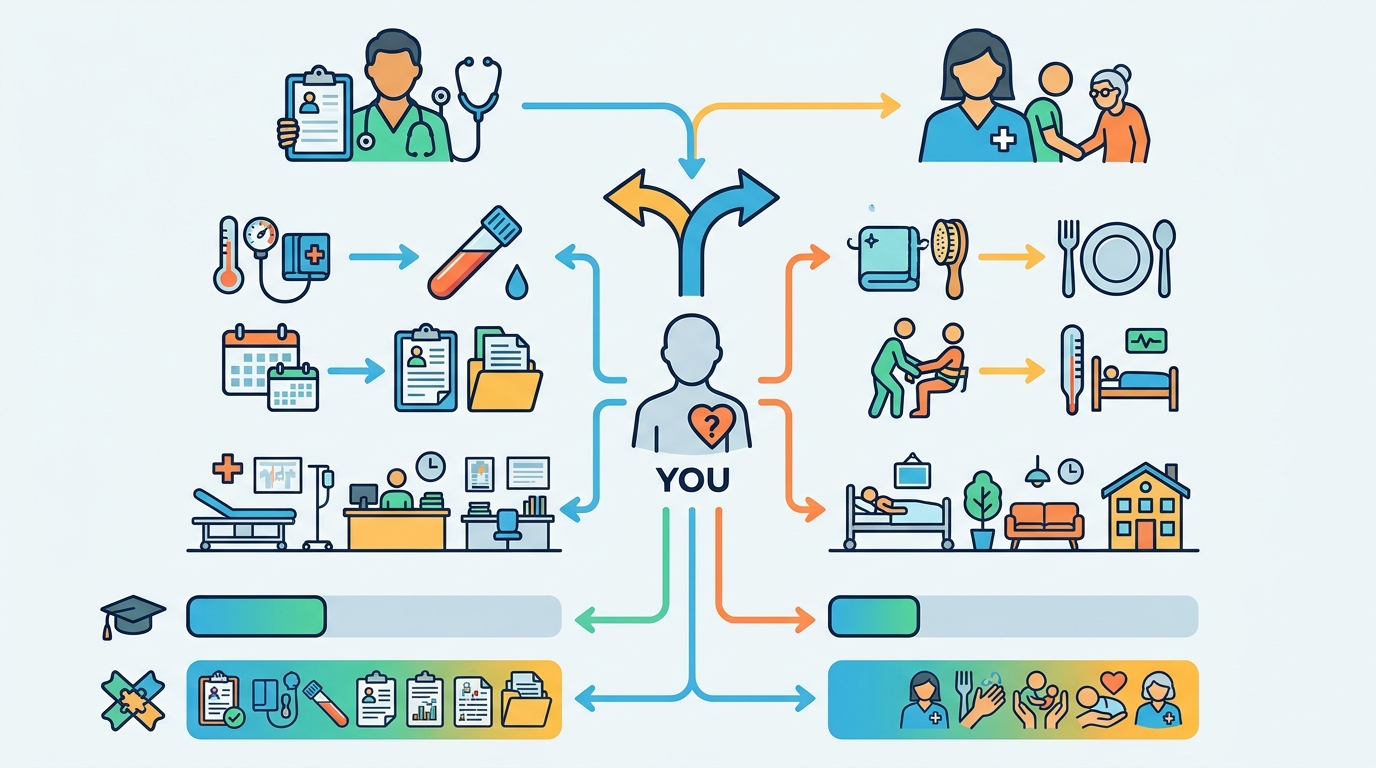
Medical Assistant vs CNA: Which Healthcare Career Fits You?
Medical assistants and certified nursing assistants both work under licensed clinicians, but the jobs point in different directions. A medical assistant usually works in a physician's office, taking vital signs, drawing lab samples, giving injections as directed by a physician and entering patient information into records (U.S. Bureau of Labor Statistics, 2025). A CNA provides basic care and helps patients with activities of daily living, which means lifting, turning and repositioning people for most of a shift (U.S. Bureau of Labor Statistics, 2025).
LPN vs RN: Which Nursing Career Path Fits You?
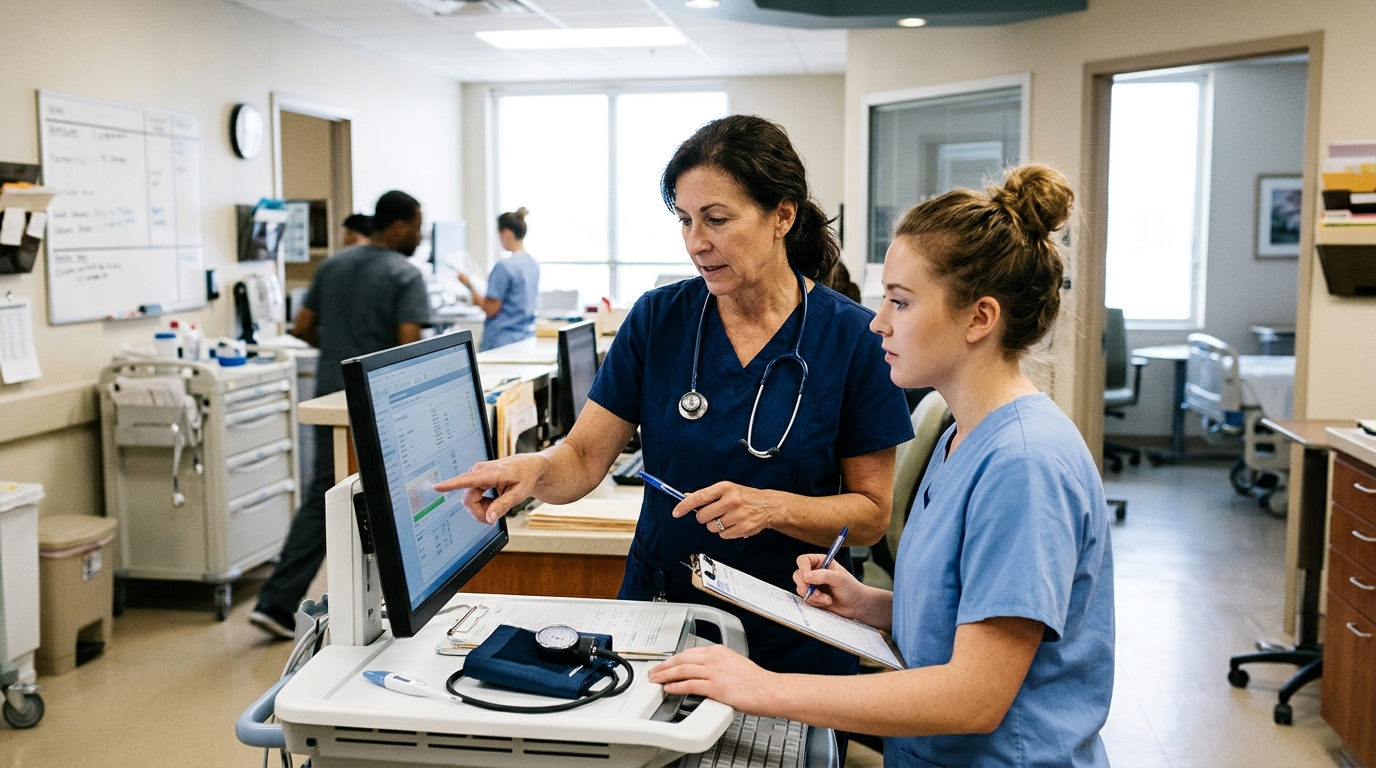
LPNs/LVNs and RNs work the same hallways and often the same patients, but they are separate licenses with separate training. An LPN/LVN certificate or diploma program typically takes about 1 year at a community college or technical school, while BSN and associate degree programs typically take 4 years and diploma programs 2 to 3 (U.S. Bureau of Labor Statistics, 2026). The LPN role centers on monitoring vital signs and hands-on basic care reported up to an RN or physician; the RN role centers on assessing patients, administering medicines and treatments, and setting up care plans (U.S. Bureau of Labor Statistics, 2026).

What Does a Phlebotomist Do?
A phlebotomist collects blood from patients and donors so it can be tested, transfused, or stored. The work pairs one technical skill — finding a vein and drawing a usable sample — with identity checks, labeling, and infection control, usually in a hospital, medical or diagnostic laboratory, blood donor center, or doctor's office (U.S. Bureau of Labor Statistics, 2025).