Articles
Every articles on Career Forward HQ.
How to Start Your Search for a Job Abroad
Starting a job search abroad means doing two things at once: finding an employer and finding a legal way to work for them. In many countries you typically need a job offer and employer sponsorship before you can apply for a work visa, though some visa programs allow individuals to apply on their own (Indeed Career Guide, undated) — so the route you qualify for usually decides which jobs are worth applying to.
How to Qualify for Skilled Trade Jobs Overseas
Qualifying for skilled trade work overseas usually comes down to three things: documented training hours, a licence or certification the overseas employer recognises, and the legal right to work in that country. For most US-trained tradespeople the route is to finish an apprenticeship and get licensed at home, add certifications tested to industry codes, then apply through contractors and staffing agencies that place crews internationally.
Is Teaching English Abroad the Right Career Move for You
Teaching English abroad suits you if you want structured work with a visa attached, enjoy being in front of a class, and can accept that the job is usually a one- to three-year placement rather than a lifelong ladder. At its most basic it calls for English fluency, a 120-hour TEFL certificate and a bachelor's degree, though requirements vary a lot by country (The TEFL Org, May 2026).
What It's Actually Like to Work Remotely From Abroad
Working remotely from another country usually means doing the same job you would do at home, on someone else's clock, with far more admin around it. The work itself is ordinary — calls, documents, tickets, deadlines. The complications sit in immigration status, tax filing, payment routes and the hours you are expected to be online.
A Practical Guide to Getting a Job in the UAE
Getting a job in the United Arab Emirates usually means being hired against a written contract that is filed with a government authority, then moving on an employer-sponsored residence and work permit. Most hiring happens before you arrive — through employer careers pages, licensed recruitment agencies and job boards — and most offers are built around a monthly package rather than an hourly rate.

Breaking Into IT: A Step-by-Step Job Search Plan for Beginners
Breaking into IT usually means targeting one entry lane — help desk, desktop support, NOC monitoring or field tech — and proving you can do the daily work: resetting accounts, closing tickets, imaging machines and escalating cleanly. Build the evidence and the resume first, then apply in steady weekly batches rather than in bursts.

Customer Service Cover Letter: Examples and Template
A customer service cover letter works when it does one job: show the hiring manager you can handle calls, complaints, orders, and records the way their customers actually arrive. The strongest letters name the systems you have used, quantify the volume you handled, and repeat the exact job title from the posting. This guide covers what employers scan for, how to build each section of the resume and letter, measurable bullet examples you can adapt, and a submission checklist.

Choosing Between Electrician and Plumber
Electrician and plumber look almost identical on paper: a high school diploma to start, a 4- or 5-year paid apprenticeship, a state licensing exam, and median annual pay of $63,190 for electricians against $63,800 for plumbers, pipefitters and steamfitters in May 2025 (U.S. Bureau of Labor Statistics, 2025). The decision comes down to what is in your hands all day — conduit, panels and the National Electrical Code, or pipe, valves and a shutoff key on an emergency call.

Social Worker or Therapist: How to Choose
Social work and therapy overlap in the room — both involve assessment, treatment planning, confidentiality and documentation — but they differ in scope. Social workers connect people to housing, benefits, schools and medical systems and often travel to clients, while marriage and family therapists spend most of their paid time in scheduled counseling sessions.

Salary Negotiation Scripts and Tips for First-Time Job Seekers
Negotiating your first offer feels presumptuous, but it is routine: Robert Half's research found that the managers it surveyed expect candidates to negotiate (Robert Half, cited by SHRM, 2019), and the firm advises job seekers not to feel pressured to accept the first offer because employers expect some back-and-forth (Robert Half, undated). The work is mostly preparation — knowing the going rate for the role in your area, setting a target and a minimum before the call, and having two or three sentences ready.

How to Become a Medical Coder: Step-by-Step Guide
Medical coding means reading clinical documentation and translating it into ICD-10-CM, CPT and HCPCS Level II codes so that care can be billed and recorded. Most people enter through a coding training program followed by an entry-level credential — usually the Certified Professional Coder (CPC) from AAPC or the Certified Coding Associate (CCA) from AHIMA — rather than through a four-year degree.

Project Management for Beginners: How to Get Your First Job
Project management specialists coordinate the budget, schedule, staffing and other details of a project (U.S. Bureau of Labor Statistics, 2025). You can enter the field without ever having run a project yourself: the Certified Associate in Project Management (CAPM) from the Project Management Institute requires no prior project experience, only a secondary degree, a minimum age of 18, and at least 23 hours of project management education before the exam.

Administrative Assistant Interview Questions and Answers
Administrative assistant interviews test three things: whether you can be trusted with a calendar and a phone line, whether you already know the software the office runs on, and whether you use good judgment when two people need you at once. Expect a mix of behavioral questions ("tell me about a time…") and practical ones about scheduling, document prep and record-keeping, sometimes followed by a short typing or spreadsheet exercise.

Breaking Into UX Design: Where to Start
UX design is the work of researching what users need, then shaping screens, flows and prototypes that meet those needs and testing whether they actually do. There is no single licence or mandatory exam to enter it: the federal data treats UX roles as part of the Web and Digital Interface Designers occupation (SOC 15-1255), where sample job titles include UX Developer and UX Engineer (ONET OnLine, undated).

UX Designer Career Path: Education, Steps, and Timeline
Becoming a UX designer means learning to research users, map flows, build interactive prototypes, and test them — then proving it with a portfolio of three to five case studies. There is no license and no single required degree, so entry routes range from a four-year bachelor's in human-computer interaction or design to a self-directed year of courses and practice projects.

How to Switch to a Career in Cybersecurity From IT Support
Moving from IT support into cybersecurity is a lateral step rather than a restart, because a large part of a support role — account administration, patching, log reading, phishing reports — is security work under a different job title. Most people make the move in 12 to 30 months by adding a recognised security certification and documented hands-on work to the support experience they already have.

Truck Driver Pay Guide: Salary Ranges and Factors
Most heavy and tractor-trailer truck drivers are paid by how many miles they have driven, plus bonuses, and the per-mile rate varies by employer, cargo type and driver experience (U.S. Bureau of Labor Statistics, 2025-05). The Bureau publishes a median annual wage for the occupation for May 2025 along with 10th and 90th percentile figures, so you can see the middle of the market and both ends of it.

Project Manager Salary: What to Expect
Project manager pay in the US is usually a base salary, often with a bonus set as a percentage of that base, and sometimes an hourly or day rate if you contract. What you can expect depends far more on your industry, metro area, employer type and the size of the budget and team you control than on the job title itself.

Project Manager Career Path: Education, Certifications, and How to Start
Project management specialists plan work, track budgets and schedules, and keep clients and vendors aligned — and most enter with a bachelor's degree in business, project management, or a related field, plus work experience in a related occupation and on-the-job training (U.S. Bureau of Labor Statistics, 2025). Certification is not always required, though it may be beneficial (U.S. Bureau of Labor Statistics, 2025).

How to Become a Bookkeeper Without a Degree
You can enter bookkeeping without a college degree. Most employers screen for double-entry fundamentals, proven accuracy with reconciliations, and hands-on skill in a ledger package such as QuickBooks Online or Xero — all of which you can learn in a few months through self-study, a community college course, or an entry clerk role.
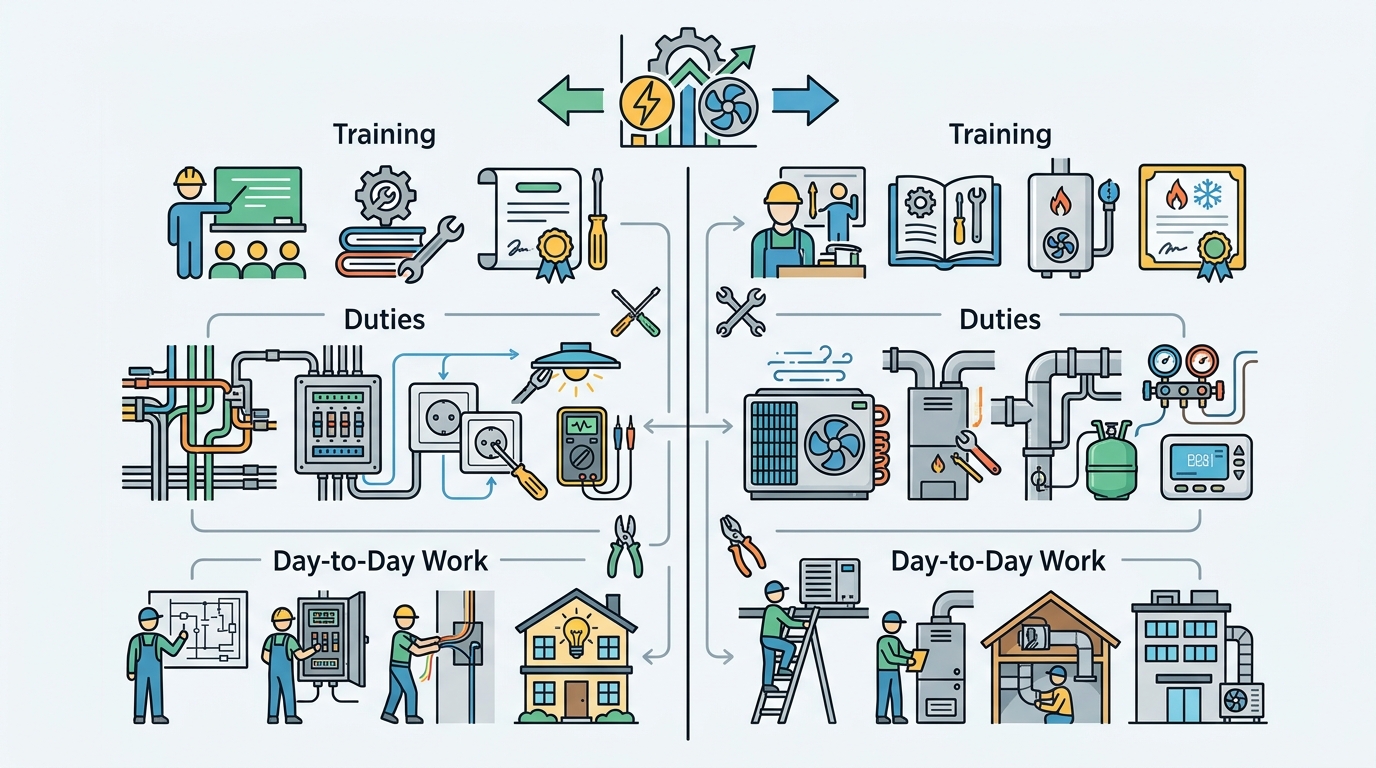
Electrician or HVAC Technician: Comparing Training, Duties, and Day-to-Day Work
Electricians and HVAC technicians overlap more than most trades: both install electrical components, both read drawings, and both spend the day on their feet with hand and power tools. The split comes in what you are responsible for — electricians own the wiring, lighting and power systems of a building, while HVAC technicians own the heating, cooling and refrigeration equipment, including the refrigerant inside it (U.S. Bureau of Labor Statistics, 2025).

Retail Interview Questions and Answers
Retail interviews are short, often held on the sales floor or in a back office, and built around a few predictable worries: will you show up for evening and weekend shifts, can you stay pleasant with a difficult customer, and can you handle money without errors. The U.S. Bureau of Labor Statistics (2025) describes the core of the job as greeting customers, recommending products, explaining benefits, answering questions, processing payment and informing customers about sales, promotions and payment or exchange policies — so almost every question maps back to one of those duties.

Electrician Salary: What to Expect
Electricians are almost always paid an hourly rate on the job, which employers and job ads then convert into an annual salary. The U.S. Bureau of Labor Statistics publishes a median annual wage for electricians as of May 2025, along with the 10th and 90th percentile figures that mark the bottom and top of the field, so you can see the whole spread rather than one average (U.S. Bureau of Labor Statistics, 2025).

So You Want to Be an Electrician: Is It a Good Fit?
Being an electrician suits you if you like diagnosing a problem with a multimeter more than discussing it in a meeting, and if you can accept standing, kneeling and working in cramped spaces as a normal part of the day (U.S. Bureau of Labor Statistics, 2026-08). The work is hands-on and code-driven: you read blueprints, install and maintain wiring and lighting systems, test components, and replace what has failed (U.S. Bureau of Labor Statistics, 2026-08).

Pharmacist vs Nurse Practitioner Salary: Which Pays More?
Pharmacists and nurse practitioners are both licensed clinicians whose pay the U.S. Bureau of Labor Statistics tracks separately, so you can compare them directly rather than guessing. BLS publishes a median annual wage for pharmacists (2025) and a median specifically for nurse practitioners inside the larger nurse anesthetist, nurse midwife and nurse practitioner group (May 2025), and those two numbers are the honest starting point for any comparison.

How to Write a Resume for a Career Change
A career-change resume has one job: to make a hiring manager see the new role inside your old work. You get there by leading with transferable skills, rewriting past duties in the posting's language, and attaching a measurable result to every claim you can support.

Break Into UX Design Without a 4-Year Degree
You can enter UX design without a four-year degree, but you are working against the default: the U.S. Bureau of Labor Statistics lists a bachelor's degree as the typical entry-level education for web developers and digital designers (U.S. Bureau of Labor Statistics, 2025), and ONET places Web and Digital Interface Designers (SOC 15-1255) in Job Zone Four, meaning most of these jobs require a four-year degree but some do not (ONET OnLine, National Center for ONET Development).
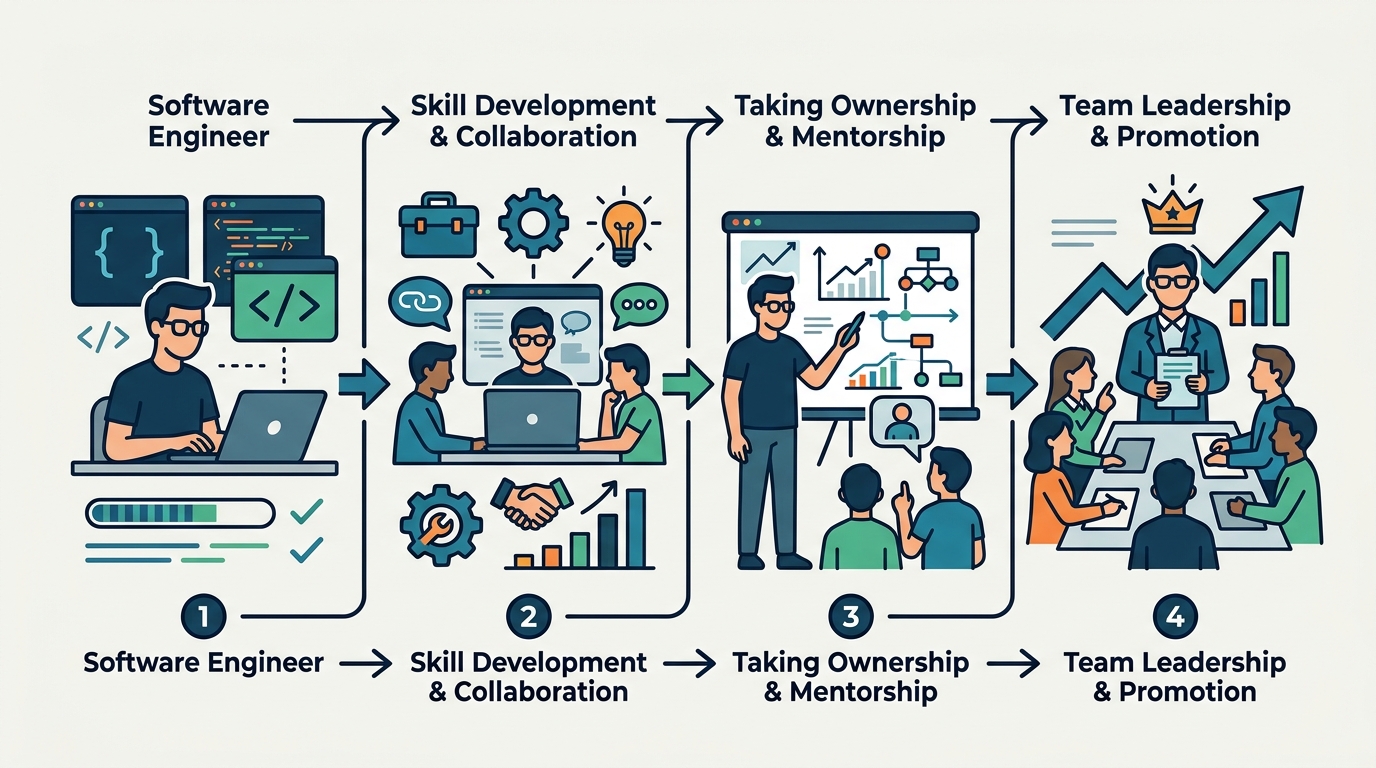
How to Get Promoted to Team Lead in Software Engineering
Getting promoted to team lead in software engineering is usually an internal move, earned by taking on coordination work — code review ownership, onboarding new hires, running standups, breaking down epics — before the title exists. Most engineers who make the jump spend 6 to 18 months visibly doing parts of the job first, then apply through an internal posting or ask their manager to open a role.

Is Paralegal Work the Right Career Path for You?
Paralegal work suits you if you like turning messy facts into organized, accurate documents under a deadline. The job centers on maintaining case files, researching laws and regulations, and drafting documents for lawyers to sign off on (U.S. Bureau of Labor Statistics, 2025), usually in an office, usually full time, and often across several matters at once (U.S. Bureau of Labor Statistics, 2025).

Data Analyst vs Data Scientist: Which One Fits You Better?
A data analyst is usually handed a defined business question and answers it with SQL queries, spreadsheets and dashboards; a data scientist is more often handed an open-ended problem and answers it with statistical models and code. The work overlaps heavily in the first year, then splits as the analyst goes deeper into reporting and stakeholder decisions and the scientist goes deeper into statistics and engineering.

Is Dental Hygienist or Registered Nursing Better Paying?
At the national median the two are almost level: $98,100 a year for dental hygienists and $97,550 for registered nurses in May 2025, a difference of $550 (U.S. Bureau of Labor Statistics, 2025). The gap shows up at the ends instead — hygienists start higher, while the best-paid 10% of nurses earned more than $137,470 against more than $126,050 for hygienists (U.S. Bureau of Labor Statistics, 2025).

How to Answer 'Tell Me About Yourself' in an Interview
"Tell me about yourself" is not an invitation to narrate your life. It is a brief audition for how clearly you think, and the strongest answers follow one shape: where you are now, two proof points with a measurable result attached, and why this role is the logical next step.

How to Switch to a Career in Software Development From Teaching
Teaching already gives you the credential most software employers screen for: a bachelor's degree is the typical entry-level education for software developers, quality assurance analysts and testers (U.S. Bureau of Labor Statistics, 2025), and high school teachers typically hold at least a bachelor's degree too (U.S. Bureau of Labor Statistics, 2025). What you are missing is technical evidence — code an employer can read, and a credential or two that signals you can work with the tools their team uses.

How to Get a Job as a Project Manager With No Experience: Step-by-Step Guide
You can move into project management without a project manager job title, but almost never without project evidence. The fastest route is to document work you have already coordinated — a move, a launch, a volunteer program, a process fix — rewrite it in project language with numbers attached, and apply to coordinator and associate-level roles that sit one rung below the PM title.

Changing Careers to UX Design: A Step-by-Step Playbook
Switching into UX design usually takes 9 to 24 months of deliberate work alongside a current job: learning a research and prototyping toolkit, shipping two or three real case studies, and then competing for a role in a field where the U.S. Bureau of Labor Statistics reported a median annual wage of $104,000 for web and digital interface designers in May 2025. The credential bar is flexible — BLS notes requirements range from a high school diploma to a bachelor's degree, and that candidates may not need a specific credential if they can demonstrate ability through prior work or projects (U.S. Bureau of Labor Statistics, 2025).

How to Switch from Customer Service to Human Resources
Customer service is one of the most common feeder jobs into human resources, because the daily work already overlaps: handling complaints, explaining policy, documenting cases and staying calm with upset people. The usual route in is a coordinator-level HR or recruiting job, reached over 6 to 18 months by taking on hiring and onboarding work in your current role, learning an HRIS and an applicant tracking system, and adding a voluntary HR certification.

Asking for a Raise as a Teacher: A Step-by-Step Guide
Asking for a raise as a teacher usually means asking about placement, not about a round number. In most public districts your base pay comes from a salary schedule: a two-axis grid where steps track credited years of experience and lanes track education level, and the cell where they meet is your base salary (Elmbridge blog, undated). For market context, the U.S. Bureau of Labor Statistics reported a median — not mean — annual wage of $72,040 for high school teachers in May 2025, a national figure that no single state or metro area matches exactly.

Data Analyst or Data Scientist: Comparing Pay and Career Paths
Data analyst and data scientist are often treated as the same job with two price tags. In practice they differ in the education employers ask for, the industries that hire most of them, and how wide the range is between the bottom and the top — and only "data scientist" is tracked by the U.S. Bureau of Labor Statistics as its own occupation (2025), while "data analyst" maps onto several different occupational categories.
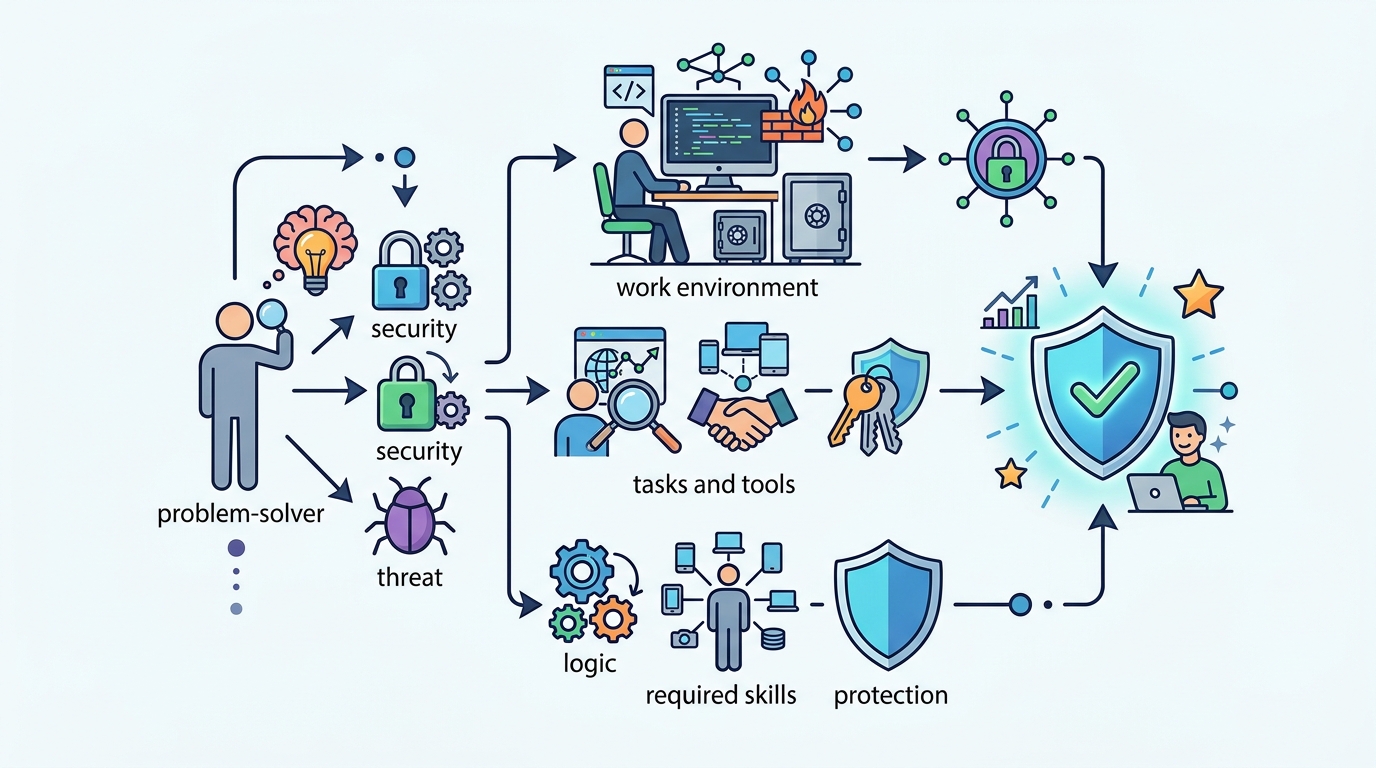
Is a Career in Cybersecurity Right for You?
Cybersecurity suits people who notice small anomalies, enjoy taking systems apart to find weaknesses, and can explain a risk to a manager who does not speak in acronyms. Day to day, information security analysts monitor networks for breaches, maintain firewalls and encryption software, check for vulnerabilities, prepare reports on attacks, and help build the organization's disaster recovery plan (U.S. Bureau of Labor Statistics, 2025).

Is a Career in Nursing Right for You?
Nursing suits you if you can think clearly while several things go wrong at once, you can stay on your feet for a long shift, and you are willing to sit a state licensing exam before you can work at all. Registered nurses need a license from the state where they work, which means graduating from an approved nursing program and passing a qualifying exam (U.S. Bureau of Labor Statistics, 2026).

Is Nursing the Right Career Path for You?
Nursing suits people who can hold a patient's hand and catch a charting error in the same ten minutes. Registered nurses assess patients, record histories and symptoms, administer medicines and treatments, and build care plans (U.S. Bureau of Labor Statistics, 2025) — usually on shifts that cover nights, weekends and holidays, because hospitals and nursing care facilities need round-the-clock coverage (U.S. Bureau of Labor Statistics, 2025).

What Does a Paralegal Do? Duties, Skills, and Work Environment
A paralegal prepares the work a lawyer signs: investigating the facts of a case, researching statutes and rules, drafting documents, obtaining affidavits, organizing trial exhibits, filing pleadings with court clerks, and calling clients and witnesses to schedule meetings (U.S. Bureau of Labor Statistics, 2026-08-27).

How to Become a Dental Hygienist: Step-by-Step Guide
Becoming a dental hygienist means completing a dental hygiene program accredited by the Commission on Dental Accreditation (CODA), passing the National Board Dental Hygiene Examination (NBDHE) and a clinical board examination such as the ADEX Dental Hygiene Examination, then applying to a state board for licensure. The U.S. Bureau of Labor Statistics (2025) lists an associate degree as the entry-level education typically required, and most associate programs run about two years of full-time study after prerequisites.

How to Become a Dental Hygienist
Becoming a dental hygienist means completing a dental hygiene program accredited by the Commission on Dental Accreditation, then passing written and clinical examinations and applying to your state board for a licence. An associate's degree is the typical entry-level education for the job (U.S. Bureau of Labor Statistics, 2025), and every state requires hygienists to be licensed, though the exact requirements vary by state (U.S. Bureau of Labor Statistics, 2025).

What Does a Data Analyst Do? A Day in the Life
A data analyst pulls records out of company systems, checks them for errors, and turns them into reports, charts and recommendations that managers use to make decisions. Most of the work is desk-based and done in SQL, a spreadsheet, a scripting language such as Python or R, and a dashboard tool.

How to Become an Electrician Without a Degree
You do not need a college degree to become an electrician. The U.S. Bureau of Labor Statistics lists a high school diploma or equivalent as the education requirement, and says most electricians learn the trade through a 4- or 5-year apprenticeship with about 2,000 hours of paid on-the-job training per year plus technical instruction (U.S. Bureau of Labor Statistics, undated).
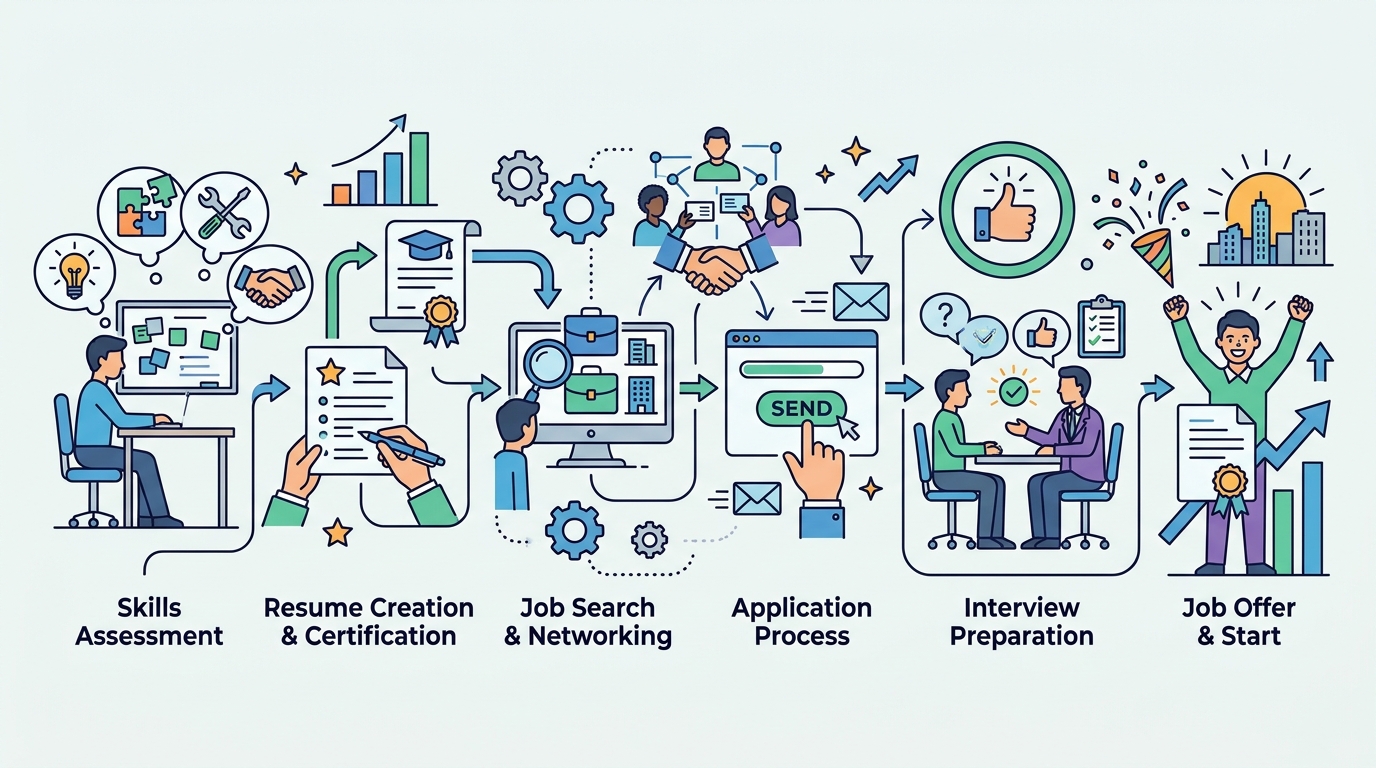
How to Get an Entry-Level Job With No Experience: Step-by-Step Guide
You can get hired into an entry-level job without paid work history, but you have to replace experience with evidence: coursework, volunteering, caregiving, side projects and short certifications that show you can do specific tasks. The work is front-loaded — one solid resume, one target list, a few rehearsed stories — and then repeated at volume until something lands.
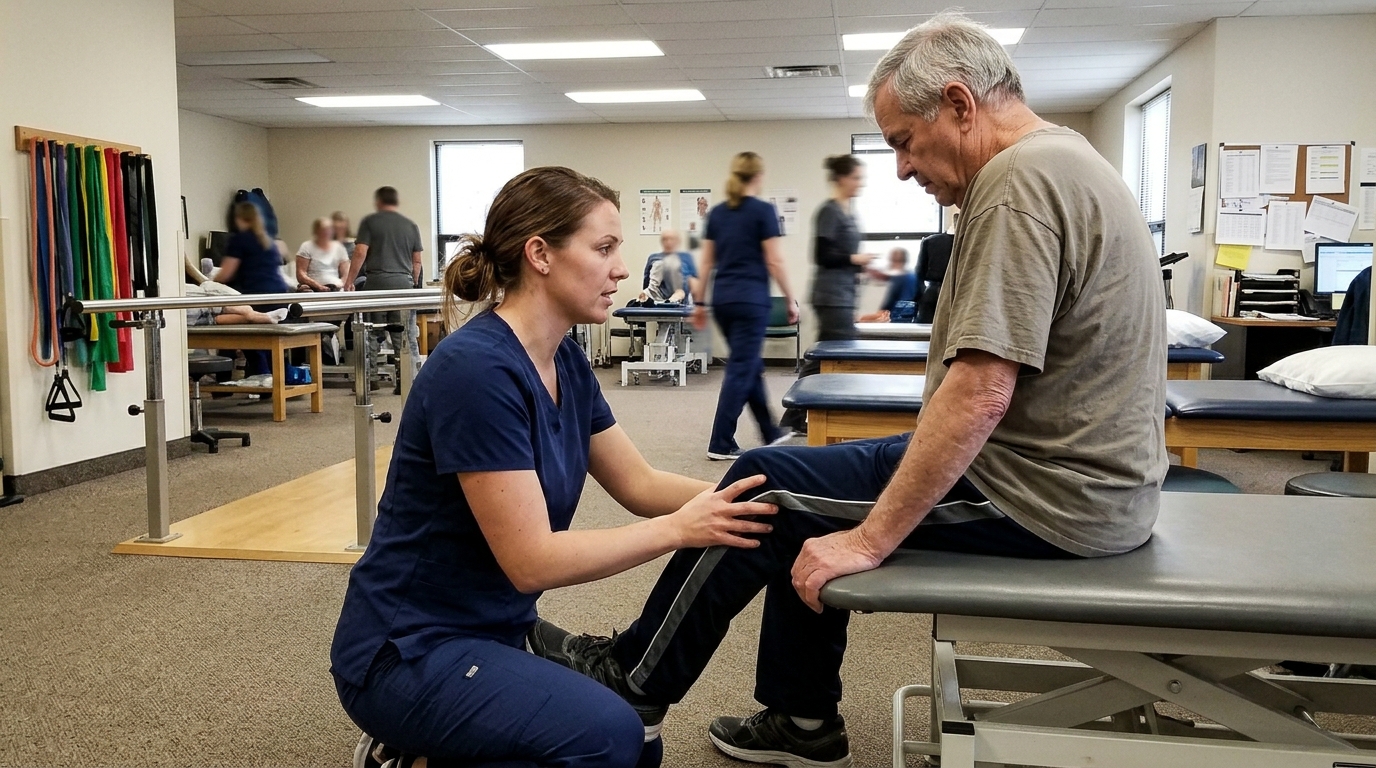
Life as a Physical Therapist Assistant: What to Expect
A physical therapist assistant (PTA) carries out treatment plans written by a physical therapist, guiding patients through exercises, hands-on techniques and mobility training after injury, surgery or illness (U.S. Bureau of Labor Statistics, 2025). It is close-contact, on-your-feet clinical work in outpatient clinics, hospitals, patients' homes and nursing facilities.

Scrum Certification Guide: What You Need to Know
A Scrum certification is a short, exam-based credential that shows you understand the Scrum framework — its roles, events, and artifacts — as defined in the Scrum Guide. The two best-known US routes are Scrum Alliance (Certified ScrumMaster, which requires a live course) and Scrum.org (Professional Scrum Master, which you can sit by self-study), and each uses a different structure, renewal model, and fee.

How to Become a Project Manager
Becoming a project manager usually means proving you can run a schedule and a budget before anyone gives you the title. Most people get there in three to six years: a bachelor's degree or equivalent work experience, two to three years in a coordinator, analyst or technical role, then a credential such as PMI's Certified Associate in Project Management (CAPM) or Project Management Professional (PMP).

How to Learn Python for Your Career
Learning Python for work is less about finishing a course and more about picking one job-shaped use for the language — data analysis, test automation, backend development, or scripting — and building three or four things that run. A focused beginner can reach useful competence in about 3-6 months at 6-10 hours a week, using free material like the official Python documentation and CS50's Introduction to Programming with Python before paying for anything.

Build Data Analytics Skills: A Step-by-Step Roadmap
Data analytics is the work of pulling raw records out of a database or spreadsheet, cleaning them, and turning them into a number or chart someone can act on. You can get to a working level in roughly six to nine months of steady part-time study if you follow a sequence — spreadsheets, SQL, visualisation, then statistics and Python — rather than jumping between tools.

How to Negotiate Your Salary as a Software Engineer
Negotiating as a software engineer comes down to three things: knowing the published pay range for your work in your location, asking only after a formal offer is in hand, and naming a specific number out loud. The U.S. Bureau of Labor Statistics put the median annual wage for software developers at $135,980 in May 2025 — that is the median, not the average — with the lowest 10 percent under $82,460 and the highest 10 percent over $214,670, so the spread you negotiate inside is wide.
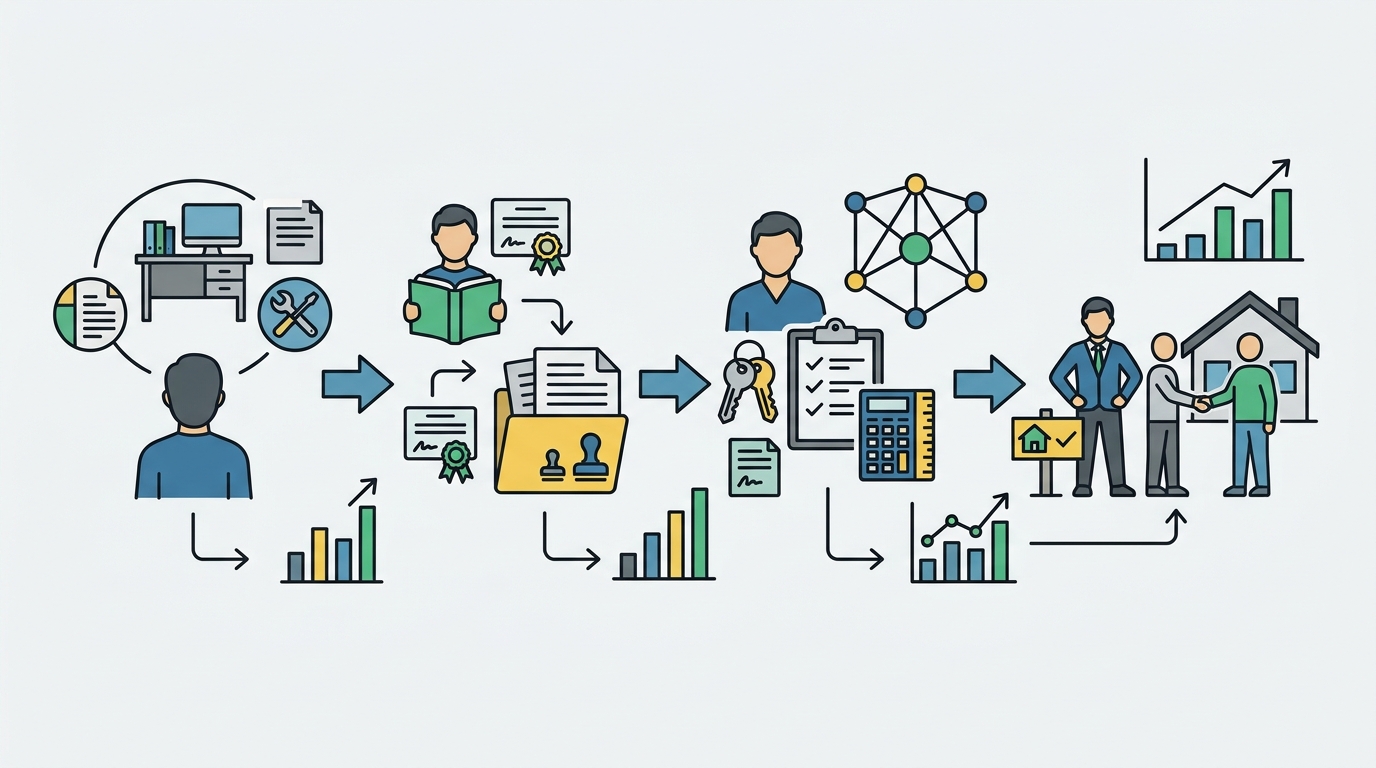
Changing Careers to Real Estate: A Step-by-Step Transition Plan
Switching into real estate sales means getting a state license, finding a brokerage to sponsor and supervise you, and surviving the months before commissions start arriving. Every state licenses agents, and minimum requirements typically include being at least 18, holding a high school diploma or equivalent, completing prelicensing courses and passing an exam (U.S. Bureau of Labor Statistics, 2026).

How to Explain a Resume Gap (With Examples)
A resume gap is any period when you were not formally employed, and it is addressed by showing how you used that time and which relevant experience you kept (Indeed Career Guide, 2026-05-18). You have three separate chances to explain it: a short entry on the resume, a fuller paragraph in the cover letter, and a rehearsed answer in the interview (Novorésumé, 2026-02-24).

How to Write a Resume With No Work Experience
A resume with no paid work history needs the same bones as any other: contact information, a summary, and evidence you can do the work. CareerOneStop (U.S. Department of Labor) lists those as core resume sections and defines the summary as three to four top accomplishments or skills (undated).

What Does a Project Manager Actually Do Day to Day?
Day to day, a project manager coordinates the budget, schedule, staffing and other details of a project (U.S. Bureau of Labor Statistics, 2025) — which in practice means updating plans, chasing commitments, checking spend against forecast, and writing things down so everyone is working from the same version. Less of the job is deciding and more of it is noticing: catching the slipped task, the unordered part, the unanswered question before any of them become a missed deadline.

How to Answer 'What Is Your Greatest Weakness?'
The weakness question is one of the most frequent things employers ask in interviews (ResumeTrick), and it is less about the flaw you name than about whether you can assess your own performance honestly and act on it. A strong answer has three parts: a genuine weakness, the specific strategy you are using to improve, and evidence of progress (Mitsuoka & Company).
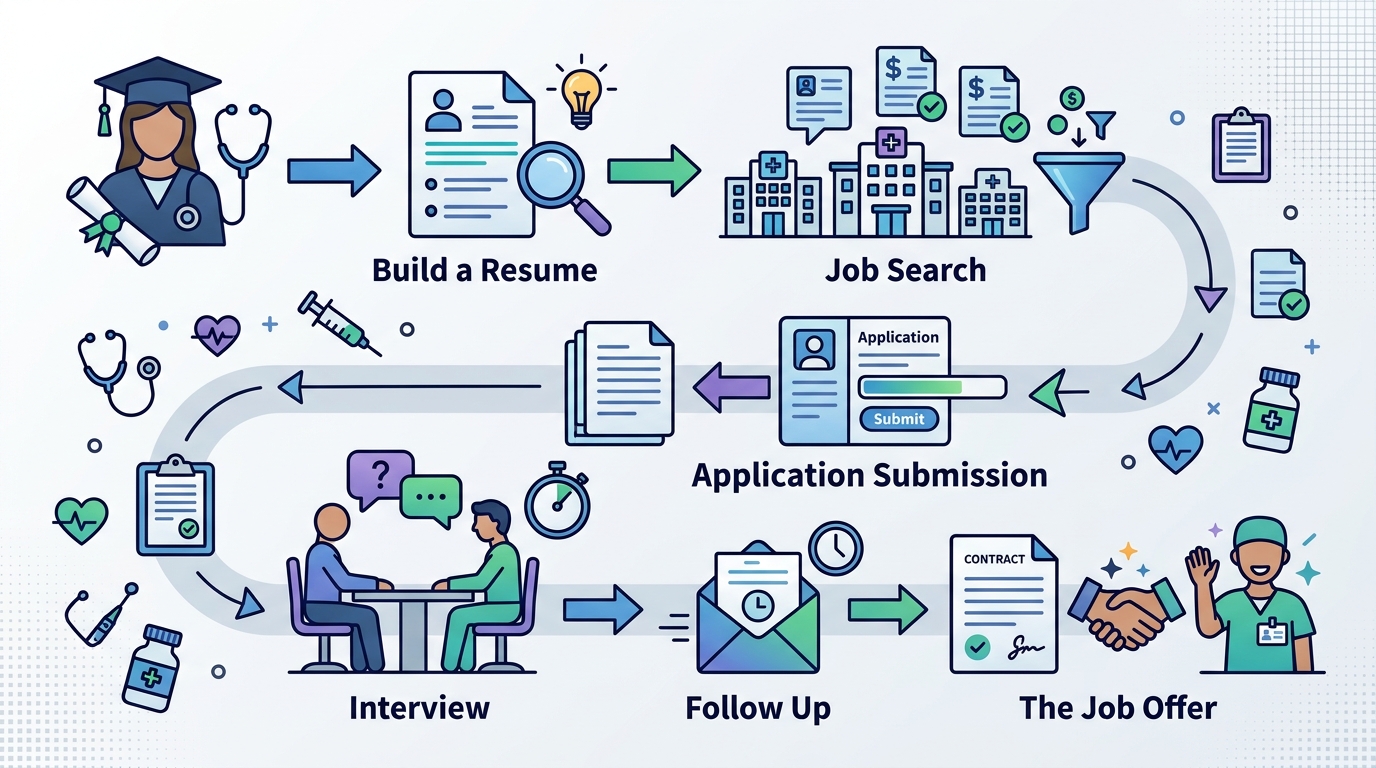
Nursing Job Search Roadmap: From New Grad to First Offer
Most new grad nurses land their first role by working two tracks at once: the licensing track (program completion, NCLEX-RN, state board requirements) and the hiring track (nurse residency cohorts, unit postings, interviews). Because many hospital new-graduate residencies run as 12-month programs with fixed cohort start dates (as described on hospital employer career sites), timing your applications matters as much as the strength of your resume.

Dental Hygienist vs Dental Assistant: Comparing Pay, Duties, and Day-to-Day Work
Dental hygienists and dental assistants work in the same treatment rooms, often side by side, but they are separate occupations with separate pay scales and separate training paths. Hygienists earned a median of $94,260 a year in May 2024 (U.S. Bureau of Labor Statistics, 2024), while dental assistants earned a median of $48,070 in May 2025 (U.S. Bureau of Labor Statistics, 2025) — a gap of roughly $46,000.
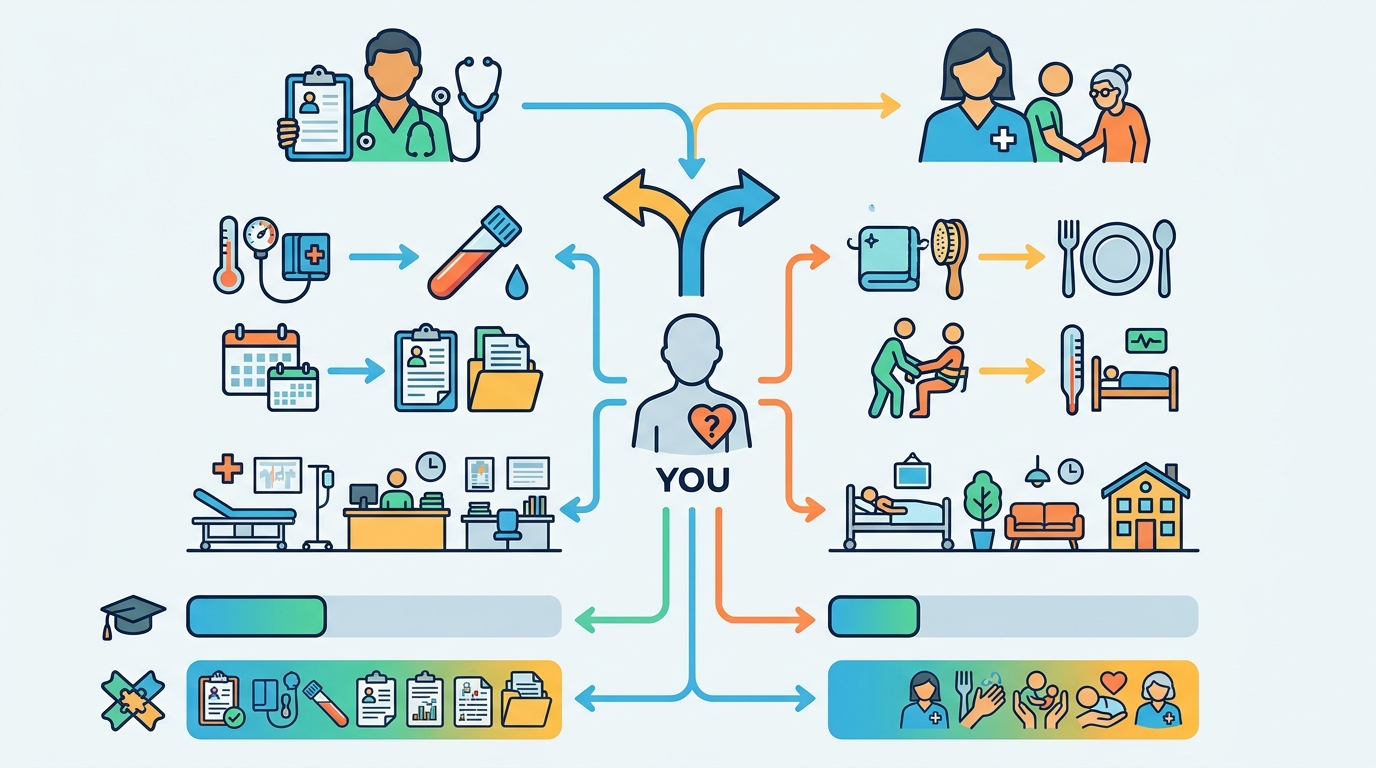
Medical Assistant vs CNA: Which Healthcare Career Fits You?
Medical assistants and certified nursing assistants both work under licensed clinicians, but the jobs point in different directions. A medical assistant usually works in a physician's office, taking vital signs, drawing lab samples, giving injections as directed by a physician and entering patient information into records (U.S. Bureau of Labor Statistics, 2025). A CNA provides basic care and helps patients with activities of daily living, which means lifting, turning and repositioning people for most of a shift (U.S. Bureau of Labor Statistics, 2025).

LPN vs RN: Which Nursing Career Path Fits You?
LPNs/LVNs and RNs work the same hallways and often the same patients, but they are separate licenses with separate training. An LPN/LVN certificate or diploma program typically takes about 1 year at a community college or technical school, while BSN and associate degree programs typically take 4 years and diploma programs 2 to 3 (U.S. Bureau of Labor Statistics, 2026). The LPN role centers on monitoring vital signs and hands-on basic care reported up to an RN or physician; the RN role centers on assessing patients, administering medicines and treatments, and setting up care plans (U.S. Bureau of Labor Statistics, 2026).

What Does a Phlebotomist Do?
A phlebotomist collects blood from patients and donors so it can be tested, transfused, or stored. The work pairs one technical skill — finding a vein and drawing a usable sample — with identity checks, labeling, and infection control, usually in a hospital, medical or diagnostic laboratory, blood donor center, or doctor's office (U.S. Bureau of Labor Statistics, 2025).

Is a Career in Teaching Right for You?
Teaching suits people who can explain the same idea three different ways without losing patience, and who accept that grading and lesson prep often happen in the evening. The U.S. Bureau of Labor Statistics (2025) describes high school teachers as planning lessons, instructing students, assessing ability, grading work, communicating with parents, enforcing classroom rules and supervising students outside class, such as at lunchtime or detention.

Accounting or Finance: How to Choose
Accounting work centers on recording, checking and reporting money that has already moved: examining financial statements, computing taxes and inspecting accounting systems for fraud risk (U.S. Bureau of Labor Statistics, 2025). Finance work, in the financial analyst sense, centers on what money should do next: researching investments, studying economic and business trends, and presenting recommendations (U.S. Bureau of Labor Statistics, 2025).

Freelance Graphic Designer Salary Negotiation Scripts and Tips
Every proposal you send as a freelance designer is a price negotiation, and every long-running client is a rate review waiting to happen. Your anchor is the market rate for the work plus the cost of running a business, because self-employed designers cover their own software, taxes and unpaid admin time, and have to find their own work as well as do it (U.S. Bureau of Labor Statistics, 2025).
How to Become a Medical Coder Without a Degree
Medical coding is one of the few healthcare roles where a certification exam, not a degree, is the gatekeeper. Most physician practices, billing companies and coding vendors screen first for a credential such as AAPC's Certified Professional Coder (CPC) or AHIMA's Certified Coding Associate (CCA), then for documented coding hours. A focused prep course plus one exam attempt commonly takes four to seven months from a standing start at 10 to 15 study hours a week.

How to Become an HVAC Technician: Step-by-Step Guide
Most people enter HVAC work by completing a postsecondary certificate or associate's degree in HVACR, passing the EPA Section 608 refrigerant exam, and then learning the trade on the job with a contractor. The U.S. Bureau of Labor Statistics (2025) lists a postsecondary nondegree award as the typical entry-level education, no prior work experience in a related occupation, and long-term on-the-job training after hire.

How to Switch from Teaching to Corporate Training
Moving from K-12 teaching into corporate training is one of the more direct career switches available to educators, because the core work overlaps: assessing what learners need, building materials, delivering sessions, and measuring whether anything stuck. The main gaps are vocabulary, authoring software, and proof that you can design for adults inside a business, not a classroom. Most teachers who make the move do it over 6 to 18 months while still teaching, by building a portfolio and taking on training-adjacent work inside their school or district.

How to Become a Real Estate Agent: A Step-by-Step Guide
Becoming a real estate agent means meeting your state's licence requirements, passing a state exam, and signing on with a sponsoring broker before you can take a single client. Every state requires a licence, and the usual minimums are being at least 18, holding a high school diploma or equivalent, completing prelicensing courses and passing an exam, with a background check in some states (U.S. Bureau of Labor Statistics, 2025).

Real Estate Agent Pay Guide: Salary Ranges and Factors
The median annual wage for real estate sales agents was $52,830 in May 2025, with the lowest 10 percent earning under $32,970 and the highest 10 percent over $123,590 (U.S. Bureau of Labor Statistics, 2025). That spread is wider than in most licensed occupations because most agents are paid from commission splits rather than a salary, so income tracks how many deals you close.

Build UX Design Skills: A Step-by-Step Roadmap
UX design is learnable outside a degree program, but only in a specific order: interface and interaction basics first, then research methods, then accessibility, then end-to-end case studies that show your thinking. The U.S. Bureau of Labor Statistics' Occupational Outlook Handbook says education for web developers and digital designers ranges from a high school diploma to a bachelor's degree, and that candidates may not need specific credentials if they can show ability through prior work or projects (AIGA, 2026).

Registered Nurse vs Physician Assistant Salary: Which Pays More?
On national medians, physician assistants out-earn registered nurses. The U.S. Bureau of Labor Statistics put the median annual wage for physician assistants at $135,880 in May 2025 and for registered nurses at $97,550 in May 2025 — a difference of $38,330, or about 39% more for PAs.

How to Become a Bookkeeper Fast: Certification Paths Compared
The fastest route into bookkeeping is not a degree — it is a software certification, a national bookkeeping exam, and supervised experience you document as you go. The two recognized credentials are the Certified Bookkeeper (CB) designation from the American Institute of Professional Bookkeepers and the Certified Public Bookkeeper (CPB) license from the National Association of Certified Public Bookkeepers; QuickBooks Online ProAdvisor certification is available at no cost through a QuickBooks Online Accountant account (Intuit/QuickBooks). Plan on 10–16 weeks of study before your first applications if you are already comfortable with spreadsheets.

HR Generalist: Job Description, Skills, and Career Path
An HR generalist handles a wide slice of the people function at one employer: recruiting and interviewing, onboarding, employment records, benefits questions, policy interpretation and employee relations complaints. It is a breadth role rather than a depth role, and it sits in the occupation the U.S. Bureau of Labor Statistics calls Human Resources Specialists, where "Human Resources Generalist" is a mapped job title (U.S. Bureau of Labor Statistics, undated).

How to Become a Paralegal After a Career Change
Paralegal work is one of the more open legal careers for career changers because there is no single fixed route in. The U.S. Bureau of Labor Statistics (2025) notes that some employers hire candidates with no legal experience or legal education and train them on the job, and that some accept a high school diploma plus experience — while others want a paralegal certificate or degree and a recognised certification.